Pets are curious creatures, and even the most cautious animals can get minor injuries at home or during outdoor play. Cuts, scrapes, minor burns, or bruises can happen, and while serious injuries always require veterinary attention, many minor injuries can be managed safely at home. Knowing basic home remedies, first-aid techniques, and preventive care can help you care for your pet effectively while minimizing pain and infection risk. This beginner-friendly guide will provide practical tips and step-by-step methods to handle minor pet injuries safely.
Understanding Minor vs. Serious Injuries
Before treating an injury at home, it is crucial to distinguish minor issues from serious conditions.
Minor Injuries
- Small cuts or scratches
- Mild burns or sunburn
- Minor bruises or swelling
- Small insect bites or stings
Serious Injuries
- Deep wounds or heavy bleeding
- Broken bones or dislocated joints
- Head injuries or seizures
- Burns covering a large area
- Difficulty breathing or unconsciousness
If your pet shows any signs of a serious injury, seek veterinary care immediately. Home remedies are only appropriate for minor issues.
Essential First-Aid Supplies for Pets
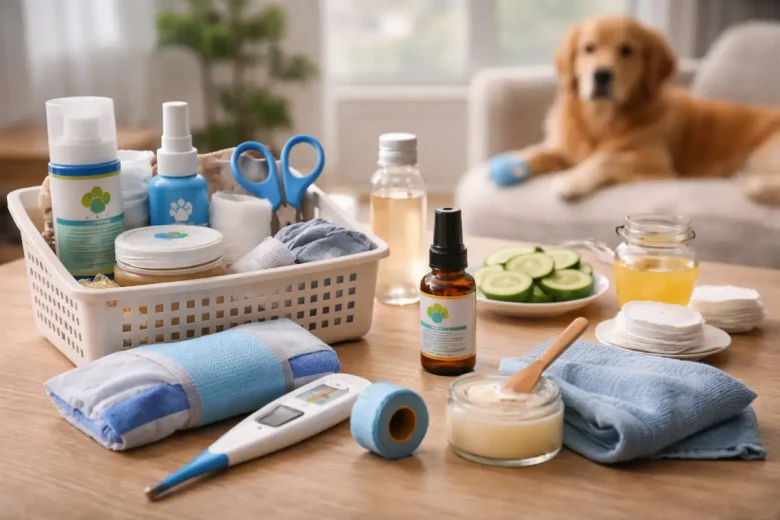
Having a first-aid kit ready at home makes responding to injuries faster and safer.
Basic Supplies Include:
- Sterile gauze pads and bandages
- Antiseptic solutions safe for pets (chlorhexidine or povidone-iodine)
- Cotton balls or swabs
- Tweezers and scissors
- Digital thermometer
- Clean towels
- Ice packs or cold compresses
- Non-toxic antibiotic ointment
- Disposable gloves
A well-stocked kit ensures you are prepared for common injuries.
Cleaning Minor Cuts and Scrapes
Proper cleaning prevents infection and speeds up healing.
Steps for Cleaning a Wound
- Restrain Your Pet Safely: Use gentle restraint or have someone help hold the pet.
- Wash Hands and Wear Gloves: Hygiene prevents bacteria from spreading.
- Rinse the Wound: Use lukewarm water to flush out dirt and debris.
- Apply Antiseptic: Use a pet-safe solution to clean the area. Avoid human antiseptics with alcohol, as they can irritate the skin.
- Apply an Antibiotic Ointment: Protects the wound from infection and promotes healing.
- Cover if Necessary: Use sterile gauze for open wounds, especially in areas prone to licking.
Monitor the wound daily, and change the dressing as needed until it heals.
Treating Minor Burns or Scalds
Accidents like hot water spills or minor sunburn can cause pain and redness.
Home Remedies for Minor Burns
- Cool the Area: Use a cold compress or run cool water over the burn for 5–10 minutes.
- Aloe Vera Gel: Apply a thin layer of pure aloe vera to soothe the skin.
- Prevent Licking: Use a soft bandage or an Elizabethan collar if your pet tries to lick the burn.
- Monitor Healing: Watch for blistering, swelling, or signs of infection.
Avoid ice directly on the skin and never apply butter or oils, as these can worsen burns.
Managing Bruises and Swelling
Bruises and minor swelling often occur after bumps, falls, or minor accidents.
Simple Care Techniques
- Cold Compress: Apply a cold pack for 5–10 minutes to reduce swelling during the first 24 hours.
- Elevation: If possible, keep the affected limb slightly elevated.
- Rest: Limit activity to prevent worsening the injury.
- Monitor for Pain or Lameness: Seek veterinary care if your pet shows severe discomfort.
Cold therapy and rest usually resolve minor bruising within a few days.
Handling Insect Bites or Stings
Insect bites, spider bites, or minor bee stings can cause redness, swelling, and mild irritation.
At-Home Remedies
- Clean the Area: Wash with mild soap and water.
- Cold Compress: Apply to reduce swelling and pain.
- Baking Soda Paste: Mix a small amount of water with baking soda and apply for relief from itching.
- Prevent Scratching or Licking: Use an Elizabethan collar if needed.
- Monitor for Allergic Reactions: Swelling of the face, lips, or difficulty breathing requires immediate veterinary attention.
Most minor bites resolve within a few days with proper care.
Preventing Infection
Preventing infection is the most important step in treating minor injuries.
Tips to Avoid Infection
- Keep the wound clean and dry.
- Change bandages daily or when soiled.
- Avoid harsh chemicals on wounds.
- Ensure your pet’s environment is clean.
- Monitor for pus, foul odor, redness, or increased pain.
Prompt attention and hygiene reduce the risk of complications.
Pain Management for Minor Injuries
Pets may experience discomfort even from minor injuries.
Safe Home Practices
- Provide a comfortable, quiet area for rest.
- Limit activity to prevent aggravating the injury.
- Consult your veterinarian before giving any human pain medication, as many are toxic to pets.
Comfort measures, along with proper wound care, promote faster healing.
When to Seek Veterinary Care
Even minor injuries can sometimes require professional attention.
Seek Help if You Notice:
- Heavy bleeding that doesn’t stop after applying pressure
- Deep wounds with exposed tissue
- Persistent swelling, redness, or pus
- Limping or difficulty walking
- Signs of systemic illness such as vomiting, lethargy, or fever
Early veterinary care prevents minor injuries from becoming serious problems.
Tips for Preventing Minor Injuries
Prevention is always better than treatment.
Preventive Measures
- Safe Environment: Keep sharp objects, toxic substances, and hot surfaces out of reach.
- Supervised Outdoor Time: Monitor pets when playing outside to avoid injuries.
- Pet-Proof Your Home: Remove tripping hazards and secure stairs or balconies.
- Regular Grooming: Trim nails, check paws, and remove mats to prevent accidents.
- Proper Exercise: Avoid overexertion or high-impact activities for older or smaller pets.
A little precaution goes a long way in reducing injuries.
Conclusion
Minor injuries are a part of pet life, but with proper care, they can be treated safely at home. By understanding the difference between minor and serious injuries, maintaining a well-stocked first-aid kit, using gentle home remedies, preventing infection, and knowing when to consult a veterinarian, pet owners can confidently manage their pets’ health. Simple practices like cleaning cuts, applying cold compresses, and protecting against insect bites not only promote faster healing but also prevent long-term complications. With awareness, preparation, and routine monitoring, you can ensure your pets recover quickly and stay happy and healthy.
FAQs
Q1: Can I use human antiseptics on my pet’s wounds?
A1: No. Many human antiseptics contain alcohol or other chemicals that can irritate pets. Always use pet-safe solutions recommended by veterinarians.
Q2: How can I prevent my pet from licking a wound?
A2: Use an Elizabethan collar or a soft bandage. Offering treats and distractions can also help.
Q3: Are home remedies safe for all injuries?
A3: Home remedies are suitable only for minor injuries like small cuts, bruises, or mild burns. Serious injuries require immediate veterinary care.
Q4: How long should I monitor a minor injury at home?
A4: Monitor daily until the wound or injury heals completely. Watch for signs of infection, swelling, or worsening symptoms.
Q5: Can minor injuries become serious if untreated?
A5: Yes. Small cuts or bruises can become infected or worsen over time. Proper care and monitoring are essential to prevent complications.