
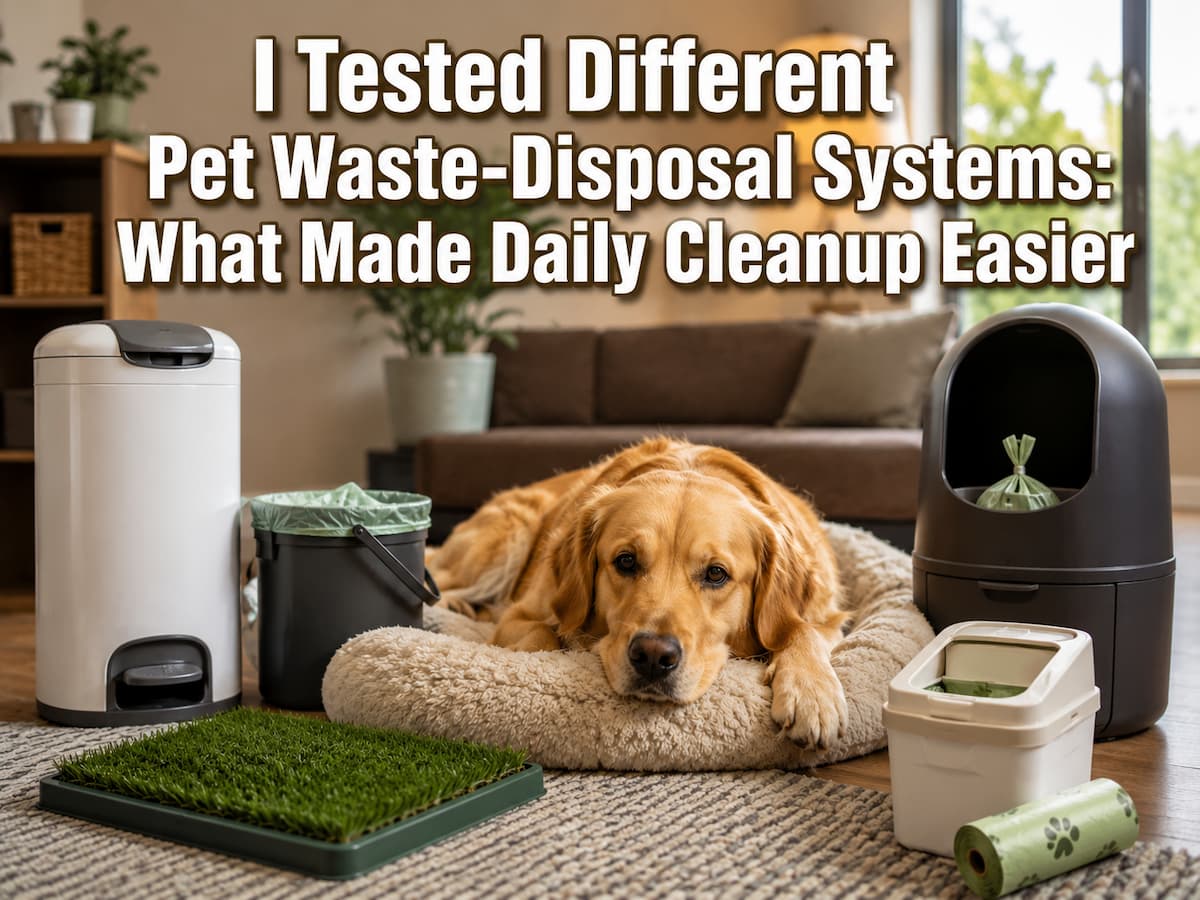
Cleaning up after a pet is one of those chores that seems simple until you have to do it every day. The scoop itself is rarely the most significant problem. What happens afterward can be more annoying: finding somewhere to put the waste, dealing with smells, remembering to empty the container, or discovering that a disposal system is inconvenient enough that you stop using it consistently.
I compared several common approaches based on the things that matter during ordinary cleanup: how easy they are to use, how well they contain odor, how often they need attention, how much space they take up, and whether they actually make the routine feel simpler.
There is no single disposal system that works perfectly for every household. A person living in an apartment has different needs from someone with a fenced yard, while a home with several dogs can produce enough waste to make a small indoor container impractical. Local waste rules also matter, particularly when considering flushing or burying pet waste. The U.S. Environmental Protection Agency advises keeping pet waste out of storm drains and surface water and notes that communities can have their own disposal requirements.
The Simple Bag-and-Trash Method Was Hard to Beat
The most basic system is also one of the easiest to understand: scoop the waste, place it in a bag, tie the bag securely, and put it into the appropriate household or outdoor trash container. Its biggest advantage is that there is very little equipment to maintain. There is no special mechanism to clean, no cartridge to replace, and no dedicated container that needs to be emptied on a complicated schedule. For someone with one pet and a small amount of daily waste, that simplicity can be more valuable than a specialized disposal product.
The weakness becomes obvious when waste sits around for several days. Even a tightly tied bag can become unpleasant if it accumulates in a warm outdoor bin. A container with a secure lid helps, but the real improvement often comes from removing waste regularly rather than relying entirely on odor-control products.
This approach also works well for walks because you can use the same basic principle away from home. The EPA recommends picking up pet waste and disposing of it properly rather than allowing it to reach storm drains or waterways.
A Dedicated Outdoor Bin Made Yard Cleanup More Organized
For homes with a yard, a separate outdoor waste container can make the routine more manageable. Instead of carrying individual bags through the house or putting every small bag immediately into the main household bin, waste can be collected in one designated location. The important feature is not a fancy design. It is containment.
A practical outdoor setup needs a secure lid, a location that is convenient enough to encourage regular use, and a cleaning routine. If you place the container at the far end of the yard, the extra walking can become a surprisingly effective reason to postpone cleanup.
Placement therefore matters more than appearance. The container should be accessible from the areas where your pet normally goes, but it should still be positioned away from high-traffic household areas. Regular emptying also makes a noticeable difference because odor problems become harder to manage when waste is allowed to accumulate. This is consistent with broader waste-management principles: keeping waste contained and removing it regularly helps limit odor and other nuisance problems.
Odor-Control Containers Help, but They Do Not Replace Emptying
Some pet waste systems use sealed lids, liners, odor barriers, or other containment features. These features can make a difference, especially when you keep the container close to the house.
The useful distinction is between containing an odor and eliminating its source. A tightly sealed container can prevent smells from spreading into the surrounding area, but the waste remains inside. Once it becomes full, the system still needs to be emptied and cleaned. That makes capacity important. A tiny container may control odor effectively but require frequent emptying. A large container may reduce the number of trips but can become unpleasant if waste remains inside for too long.
For a single small dog, a compact system may be sufficient. A household with multiple dogs may need something designed around higher volume. Choosing capacity based on actual daily waste is more practical than choosing a container simply because it looks convenient in a product photograph.
Systems With Disposable Liners Are Convenient but Create Ongoing Costs
Liner-based disposal systems are attractive because the cleanup process is straightforward. Waste goes into the container, the liner holds it, and the filled liner can be removed without directly handling the accumulated waste. However, this convenience comes with a trade-off: the need for recurring supplies. If a system requires proprietary bags or refills, the initial purchase price does not tell you what the system will cost over months of daily use. The same is true for containers that use special odor-control cartridges.
Before choosing one, consider how frequently your household would need replacements. A system that saves a few seconds during every cleanup may be worthwhile for a busy household, but the convenience should be weighed against the recurring expense and availability of replacement supplies. A simpler container that accepts ordinary bags can sometimes provide nearly the same practical benefit with fewer ongoing requirements.
Flushable Waste Sounds Convenient, but Plumbing and Local Rules Matter
Flushing pet waste may seem like the cleanest solution because the waste immediately leaves the household. However, it is not an option that should automatically be assumed to be appropriate in every situation. Plumbing systems differ, and households using septic systems need particular caution. Local wastewater guidance can also vary. Some public guidance has identified flushing pet waste as an option under certain circumstances, while also emphasizing the need to follow local requirements.
The type of waste also matters. A small amount of animal feces is different from attempting to flush litter, bags, large quantities of material, or other products that are not designed to enter plumbing.
For that reason, flushing should be treated as a location-specific option rather than a universal recommendation. If you’re unsure, consult your local wastewater utility or waste authority before making it part of your routine.
Backyard Burial Is Not a Universal Shortcut
Burying pet waste may sound like an easy solution for homeowners with gardens, but it should not be treated as a general-purpose disposal method. Improperly placed waste can contribute pollutants to soil and water, particularly if runoff carries it toward drains or waterways. The EPA specifically warns against allowing pet waste to enter storm drains or surface water.
Local regulations can also determine what is permitted. Even where a form of burial is allowed, location and quantity can matter. This is one of those situations where a disposal method that looks environmentally simple can create problems if applied without considering the property’s drainage, water sources, local rules, and the amount of waste being handled.
Composting Requires More Than Throwing Waste Into a Compost Bin
Pet waste composting is another area where attractive environmental claims can make the process sound easier than it really is. A normal household compost pile should not automatically be treated as an appropriate place for dog or cat waste. Proper treatment depends on the system, materials, temperature management, intended use of the finished compost, and local guidance.
That makes composting a specialized approach rather than a universal recommendation for everyday pet owners. If the goal is simply to make daily cleanup easier, a reliable contained-disposal system may be considerably more practical. The best disposal method is often the one you can use consistently and correctly rather than the one that sounds most sophisticated.
The Best System Depends on Where the Mess Happens
One of the clearest differences between disposal systems is location. If most waste is collected during walks, carrying bags and using public pet-waste stations or appropriate trash facilities may be all that is necessary. Many parks and public areas provide dedicated waste stations, and the EPA identifies these structures as one practical component of pet waste management.
If most waste comes from the backyard, placing an outdoor container close to the cleanup area can save time every day. The disposal challenge changes again when a pet uses an indoor litter box. The container needs to be positioned conveniently without making the living area unpleasant.
This step sounds obvious, but it is easy to buy a disposal system based on features rather than workflow. A better question is “Which system has the fewest features?” It is “Where do I normally clean up, and what makes that particular routine inconvenient?”
What Actually Made Daily Cleanup Easier
After comparing the different approaches, the most useful improvements were surprisingly basic.
- Convenient placement mattered because a disposal system that was close to the cleanup area was easier to use consistently.
- Secure containment mattered because keeping waste enclosed reduced the nuisance associated with odors and accidental spills.
- Easy emptying mattered because complicated systems quickly become frustrating when they need frequent attention.
- Appropriate capacity mattered because both tiny containers that fill immediately and oversized containers that hold waste for too long can be inconvenient.
- Simple replacement supplies mattered because a system is easier to maintain when bags, liners, or other consumables are readily available.
The pattern is important: the best system is not necessarily the one with the most odor-control technology or the most elaborate design. It is the one that fits naturally into how your household already handles pet care.
How I Would Match the System to the Household
For a single dog with regular walks and limited yard use, the basic bag-and-trash approach is difficult to beat for simplicity. For a dog that uses the backyard frequently, a dedicated outdoor container makes more sense because it creates a consistent collection point. For multiple pets, capacity and emptying frequency become more important than compact size.
For an apartment, a sealed indoor container may be more practical because there may be no convenient outdoor disposal point immediately outside the living space. For cat owners, the disposal system needs to accommodate litter waste rather than simply copying a dog-waste setup. The materials involved and the appropriate disposal route should be checked against local waste guidance and the instructions for the litter being used. The common thread is workflow. A disposal system should remove friction from the chore rather than introduce another maintenance task.
Conclusion
Pet waste cleanup is never going to become the most exciting household chore, but the right disposal setup can make it noticeably less annoying. The biggest improvement usually comes from reducing the number of small decisions involved: where the waste goes, where the bags are stored, when the container is emptied, and how it is kept clean.
For many households, a secure container positioned close to the normal cleanup area is enough. Others may benefit from a larger outdoor system or a sealed indoor container. Specialized options such as flushing, burial, or composting require more attention to plumbing, environmental conditions, and local rules, so convenience alone should not determine whether they are used.
Ultimately, the most effective pet waste-disposal system is the one that matches your pet’s routine, your available space, and the amount of waste your household actually produces. A simple system that you can maintain every day is usually more useful than an elaborate one that becomes inconvenient after the novelty wears off.
FAQs
1. What is the easiest way to dispose of dog waste every day?
For many households, the simplest method is to pick up the waste with a suitable bag, secure it properly, and place it in an appropriate trash container. A dedicated outdoor bin can make the routine easier when a dog regularly uses the backyard.
2. How can I reduce the smell from a pet waste bin?
Start with containment and regular emptying rather than relying entirely on fragrance or odor-control products. A secure lid, suitable liner, convenient placement, and frequent removal of accumulated waste can make the biggest practical difference.
3. Should pet waste go in the regular trash?
In many places, bagged pet waste can be placed in the regular trash, but local waste rules should be checked because disposal requirements vary. The EPA also recommends preventing pet waste from entering storm drains and surface waters.
4. Can you flush dog poop down the toilet?
It can depend on local wastewater guidance, plumbing, and whether the property uses a septic system. Do not assume that every type of pet waste or disposal bag is suitable for flushing. Check with your local wastewater authority before adopting this method.
5. Is a pet waste disposal system worth buying?
It can be worthwhile if it solves a specific problem, such as odor, inconvenient placement, frequent bag handling, or high waste volume. If your current bag-and-trash routine already works well, a specialized system may not provide enough additional convenience to justify the cost.

Daniel Maxfield is a pet care writer focused on practical guidance for modern pet owners. He covers pet wellness, grooming, behavior, travel routines, and everyday care habits for dogs and cats. Through reader-focused educational content, Daniel shares simple and accessible tips designed to support healthier, safer, and more organized daily life with pets.