
The first time I truly understood what stress looked like in a pet, it wasn’t dramatic. Cooper didn’t bark or hide. He just stopped eating his breakfast. Same bowl, same kibble, same kitchen corner he’d eaten in for two years. He sniffed it, looked at me with those soft brown eyes, and walked away. I thought he was being picky. I was wrong.
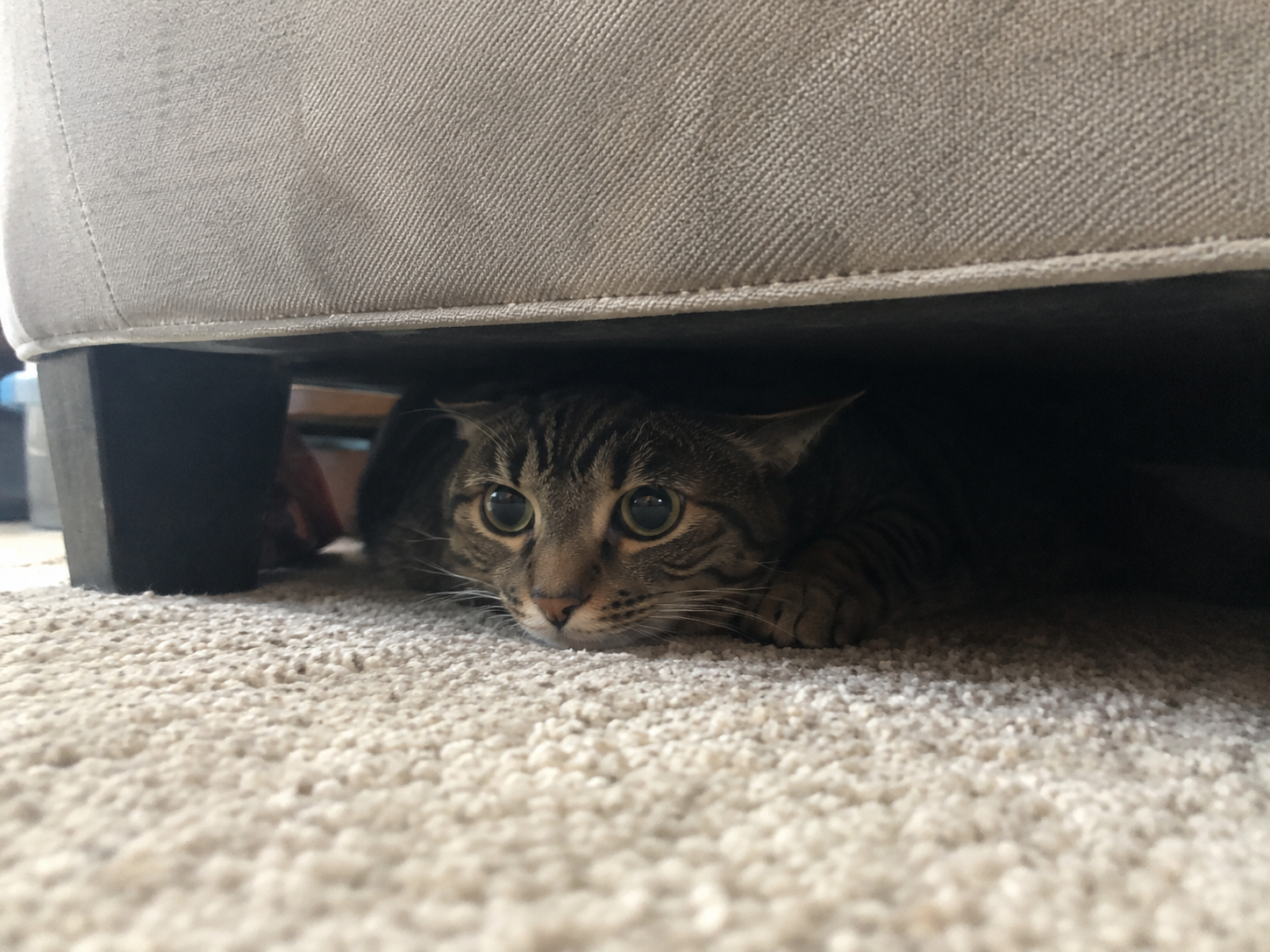
Three days later, a thunderstorm rolled through. That’s when the real picture came together. Cooper was panting heavily, pacing the hallway, trying to wedge himself behind the toilet. Meanwhile, Moochi had been over-grooming her left flank for weeks, leaving a bare patch of skin my sister had dismissed as “just a hot spot.” Both animals were telling us something. Neither of us had been listening.
Stress in pets doesn’t announce itself. It creeps in through small behavioral shifts, physical changes, and habits that seem harmless until you connect the dots. This article is about learning to read those dots before they turn into something that requires a vet visit, a behaviorist, or months of undoing damage.
Why Pets Get Stressed (And Why We Miss It)
Here’s the uncomfortable truth: most pet stress is caused by us. Not intentionally, but through the rhythms of modern life that don’t account for what our animals actually need. Loud environments, unpredictable schedules, new people, travel, even changes in furniture arrangement can unsettle a pet whose world is built on routine and scent markers.
Cooper’s stress trigger turned out to be construction noise from a house being renovated two doors down. The intermittent banging, the unfamiliar trucks, the scent of workers drifting through the fence. He couldn’t see the threat, couldn’t understand it, and couldn’t escape it. For a creature wired to assess danger and either fight or flee, that helplessness is genuinely distressing.
Moochi’s stress was quieter and more insidious. My sister had started working from home, which you’d think a cat would love. But the constant presence meant Moochi never got her usual midday solitude. The over-grooming was displacement behavior, a coping mechanism. She couldn’t control her environment, so she controlled what she could reach: her own fur.
The Physical Signs That Are Easy to Overlook
Physical symptoms of stress are often the first thing a vet notices, but the last thing an owner connects to emotional distress. We look for illness, injury, or dietary issues. We don’t always consider that the body and mind are inseparable in animals just as they are in humans.
With Cooper, the warning signs showed up in a pattern:
- Appetite changes: Skipping meals he normally inhaled, leaving food in the bowl
- Excessive shedding: More hair than usual during brushing, clumps coming out with gentle strokes
- Dilated pupils: Even in normal indoor lighting, his eyes looked wide and dark
- Panting without heat or exercise: Heavy breathing while lying still on the couch
- Digestive upset: Two episodes of loose stool that cleared up once the noise stopped
Moochi’s physical signs were different, which is important because stress manifests differently across species and even individual animals:
- Over-grooming: A bare, irritated patch on her flank that she licked raw
- Weight fluctuation: She lost about half a pound over six weeks, subtle but measurable
- Third eyelid visibility: The thin membrane at the inner corner of her eye became more prominent
- Changes in litter box habits: She started urinating just outside the box, not consistently, but enough to notice
- Dull coat: Her fur lost its usual sheen, looking dry and less vibrant
None of these symptoms, taken alone, scream “stress.” That’s the challenge. Appetite changes could be a food issue. Shedding could be seasonal. Litter box problems could be medical. The key is looking at the cluster, the pattern, the context of when these changes started and what else was happening in the environment.
Behavioral Changes That Tell the Real Story
If physical signs are the whisper, behavioral changes are the shout. The problem is, pets can’t tell us what’s wrong, so they show us through actions that often get misinterpreted as “bad behavior” rather than distress signals.
| Behavior | What It Might Mean | Common Misinterpretation |
|---|---|---|
| Hiding or avoiding interaction | Seeking safety from perceived threat | “He’s just being antisocial” |
| Excessive vocalization | Attempting to communicate distress | “She’s just attention-seeking” |
| Destructive behavior | Displacement activity, energy release | “He’s being naughty on purpose” |
| Aggression or irritability | Fear response, feeling cornered | “She’s just mean sometimes” |
| Clinginess or shadowing | Seeking security from trusted human | “He’s being needy” |
| Changes in sleep patterns | Hypervigilance, inability to relax | “She’s just restless tonight” |
Cooper’s behavior during the construction period was textbook. He started following me from room to room, something he’d never done before. He’d been an independent dog, content to nap in the living room while I worked in the office. Suddenly, he needed to be within three feet of me at all times. I initially found it endearing. Then I realized he was using my presence as a security blanket against something he couldn’t process.
Moochi’s behavioral shift was the opposite. She withdrew. She stopped sleeping on my sister’s bed, choosing instead the closet shelf where no one could reach her. She ignored her favorite toys. When my sister tried to pet her, Moochi would tolerate it for a few seconds, then leave. The cat wasn’t being aloof. She was overwhelmed and retreating to the only space she controlled.
Situational Triggers You Might Not Consider
When I list common stress triggers, most people think of fireworks, vet visits, and thunderstorms. Those are obvious. But the subtle triggers are the ones that catch us off guard because they seem benign to us.
Environmental changes: New furniture, rearranged rooms, fresh paint, new flooring. Your pet’s world is mapped by scent and familiarity. When that map changes, even for the better, it creates uncertainty. My sister repainted her bedroom last year, and Moochi refused to enter for three days. The smell was unfamiliar, and in a cat’s world, unfamiliar can mean dangerous.
Schedule disruptions: Pets are creatures of routine. Cooper knows breakfast happens at 7:15, walk at 6:30 PM, bedtime treat at 10:00. When I traveled for work and my neighbor fed him at inconsistent times, his stress showed up as digestive issues and increased barking. The timing mattered as much as the food itself.
Social changes: New pets, visiting guests, a baby, a partner moving in, even a regular visitor stopping their visits. Each social shift requires adjustment. Cooper took two full weeks to relax when my sister’s boyfriend started staying over regularly. He wasn’t jealous. He was uncertain about where this new person fit in the pack hierarchy.
Sensory overload: Loud music, frequent doorbell rings, traffic noise, construction, vacuum cleaners. Pets hear frequencies we don’t. What sounds like background noise to us can be physically uncomfortable or alarming to them. The construction noise that stressed Cooper was barely audible to me with the windows closed. To him, it was a constant, unpredictable threat.
Health-related stress: Pain, illness, or even the side effects of medication can cause stress behaviors that look emotional but are actually physical. When Moochi had a urinary tract infection last winter, her stress behaviors (hiding, inappropriate urination) were identical to her environmental stress behaviors. The vet visit revealed the true cause. Always rule out medical issues before assuming pure behavioral stress.
How I Track Stress Patterns in Cooper and Moochi
After missing Cooper’s stress signals initially, I started a simple tracking method that sounds more elaborate than it is. I keep a small notebook (yes, paper, not an app) and jot down anything unusual: skipped meals, extra panting, hiding, changes in play interest, anything out of character. I also note the date, time, and what was happening in the environment.
Within two weeks, patterns emerge. I noticed Cooper’s appetite dips always coincided with garbage truck days. The truck’s hydraulic system makes a high-pitched whine he finds unbearable. Now I feed him in the basement on those mornings, and the problem disappeared.
My sister uses her phone’s notes app for Moochi, tracking litter box usage, grooming frequency, and social behavior. She color-codes days: green for normal, yellow for slightly off, red for concerning. It’s not scientific, but it creates a visual record that makes patterns obvious. The over-grooming correlated almost exactly with my sister’s busiest work weeks, when she was on video calls all day and Moochi had no quiet time.
You don’t need a complex system. You need consistency. The goal isn’t to become a data analyst. It’s to build awareness so you catch problems before they become crises.
When Stress Becomes an Emergency
Most pet stress is manageable with environmental adjustments, routine, and patience. But there are signs that require immediate veterinary attention, not just management:
- Complete refusal to eat or drink for more than 24 hours
- Self-harm behaviors that break skin or cause bleeding
- Sudden aggression that poses a safety risk to humans or other pets
- Profound lethargy or unresponsiveness
- Repeated vomiting or diarrhea, especially with blood
- Signs of self-trauma: head pressing, circling, compulsive pacing
These symptoms can indicate severe stress, but they can also signal underlying medical conditions that present with stress-like behaviors. When Cooper had his first episode of stress-induced digestive upset, I called the vet immediately. It turned out to be stress-related, but I didn’t assume. I verified. That’s the line between responsible pet ownership and dangerous guessing.
What Actually Helps (And What Doesn’t)
Once you recognize stress, the next step is addressing it. I’ve tried plenty of approaches. Some worked. Some were a waste of money. Here’s what I’ve learned:
What helps:
- Creating safe spaces: Cooper has a covered crate in a quiet corner with a fan for white noise. When he’s stressed, he retreats there voluntarily. It’s his choice, not his prison.
- Maintaining routine: Predictability reduces uncertainty. Same feeding times, same walk routes, same bedtime. Boring is comforting to a stressed pet.
- Exercise and mental stimulation: A tired body has less energy for anxiety. Cooper’s stress behaviors decrease significantly on days he gets a long walk or a puzzle toy session.
- Gradual desensitization: For predictable triggers like thunderstorms, playing recorded storm sounds at low volume while offering treats can build tolerance over time. It takes weeks, not days.
- Pheromone diffusers: I was skeptical, but the Feliway diffuser made a noticeable difference for Moochi during the work-from-home transition. It’s not a miracle, but it’s a useful tool.
What doesn’t help:
- Punishment: Yelling at a stressed pet for stress behaviors (like destructive chewing or inappropriate elimination) makes the stress worse. You’re adding fear to an already overwhelmed animal.
- Forcing interaction: Dragging a hiding pet out from under the bed doesn’t build trust. It confirms that their environment isn’t safe.
- Over-the-counter sedatives without vet guidance: I tried a “calming treat” from a pet store once. Cooper had an adverse reaction. Now I only use supplements or medications recommended by our vet.
- Ignoring it and hoping it passes: Stress doesn’t usually resolve on its own. It escalates or becomes chronic. Address it early.
The Long Game: Building Resilience
Recognizing stress isn’t just about managing crises. It’s about building a pet who can handle life’s inevitable disruptions without falling apart. Cooper will never love thunderstorms, but he now tolerates them without panic. Moochi will always prefer quiet, but she no longer over-grooms when the house is busy.
The resilience came from small, consistent exposures to manageable stressors paired with positive outcomes. Cooper hears the garbage truck, goes to the basement, gets a treat. The truck predicts good things, not just noise. Moochi gets her quiet closet time even on busy days, so she knows it’s always available. The predictability of relief makes the stressor itself less threatening.
It also came from us changing our expectations. We stopped expecting our pets to adapt instantly to our lives and started adapting our lives to their needs, at least in small ways. That shift in mindset, more than any product or technique, made the difference.
Related Articles
If you’re working through stress-related challenges with your pet, these articles from our site connect directly to what we’ve covered here:
- Managing Pet Stress During Loud Noises and Busy Days — Specific strategies for the environmental triggers that send Cooper into panic mode, including noise desensitization and safe space setup.
- Building Positive Behavior in Pets Through Daily Reinforcement — The reinforcement techniques I used to rebuild Cooper’s confidence after his stress period, and how daily small wins create long-term resilience.
- How to Stop Cats From Scratching Furniture — Stress often manifests as destructive behavior. This covers how to redirect those behaviors constructively rather than punishing them.
- How I Correct Small Bad Habits in Pets Without Stress — Critical reading if your pet’s stress behaviors have developed into habits that need gentle correction without adding more anxiety.
- How I Taught My Dog to Stay Calm When the Doorbell Rings — A step-by-step look at desensitizing Cooper to a specific trigger, using the same principles that work for broader stress management.
- How to Plan a Pet-Friendly Vacation — Travel is a major stressor for pets. This covers preparation strategies that reduce anxiety before you even leave the house.
- How I Explore Cities Safely With My Pet Step by Step — Urban environments are full of unpredictable stressors. This is how I introduce Cooper to new environments without overwhelming him.
- How to Maintain Dental Health for Pets — Dental pain is a hidden source of stress in pets. This covers what to check during your regular health assessments.
- How I Monitor Pet Energy Levels for Early Health Signs — Energy changes are often the first indicator of stress or illness. This is the tracking system I use alongside behavioral observation.
- Creating a Safe Indoor Environment for Senior Pets at Home — Older pets are more vulnerable to stress. This covers environmental modifications that provide security and comfort for aging animals.
Sources and References
- American Kennel Club. “Signs Your Dog Is Stressed and How to Relieve It.” https://www.akc.org/expert-advice/health/signs-your-dog-is-stressed/
- Cornell University College of Veterinary Medicine. “Feline Stress and Anxiety.” https://www.vet.cornell.edu/departments-centers-and-institutes/cornell-feline-health-center/health-information/feline-health-topics/anxiety
- ASPCA. “Behavioral Problems in Dogs: Stress and Anxiety.” https://www.aspca.org/pet-care/dog-care/common-dog-behavior-issues
- VCA Animal Hospitals. “Stress in Dogs.” https://vcahospitals.com/know-your-pet/stress-in-dogs
- PetMD. “Signs Your Cat Is Stressed.” https://www.petmd.com/cat/behavior/signs-your-cat-is-stressed
- The Spruce Pets. “How to Tell If Your Dog Is Stressed.” https://www.thesprucepets.com/signs-of-stress-in-dogs-1118611
- American Veterinary Medical Association. “Pet Behavior and Training.” https://www.avma.org/resources/pet-owners/petcare/pet-behavior-and-training
- International Cat Care. “Stress in Cats.” https://icatcare.org/advice/stress-in-cats/
- Merck Veterinary Manual. “Introduction to Behavioral Problems of Dogs.” https://www.merckvetmanual.com/behavior/normal-social-behavior-and-behavioral-problems-of-domestic-animals/introduction-to-behavioral-problems-of-dogs
Disclaimer: The experiences shared in this article are personal and based on caring for Cooper (Golden Retriever) and Moochi (domestic short-haired cat). Every pet is unique. If you suspect your pet is experiencing stress, consult your veterinarian to rule out underlying medical conditions and develop an appropriate management plan.

Daniel Maxfield is a pet care writer focused on practical guidance for modern pet owners. He covers pet wellness, grooming, behavior, travel routines, and everyday care habits for dogs and cats. Through reader-focused educational content, Daniel shares simple and accessible tips designed to support healthier, safer, and more organized daily life with pets.