
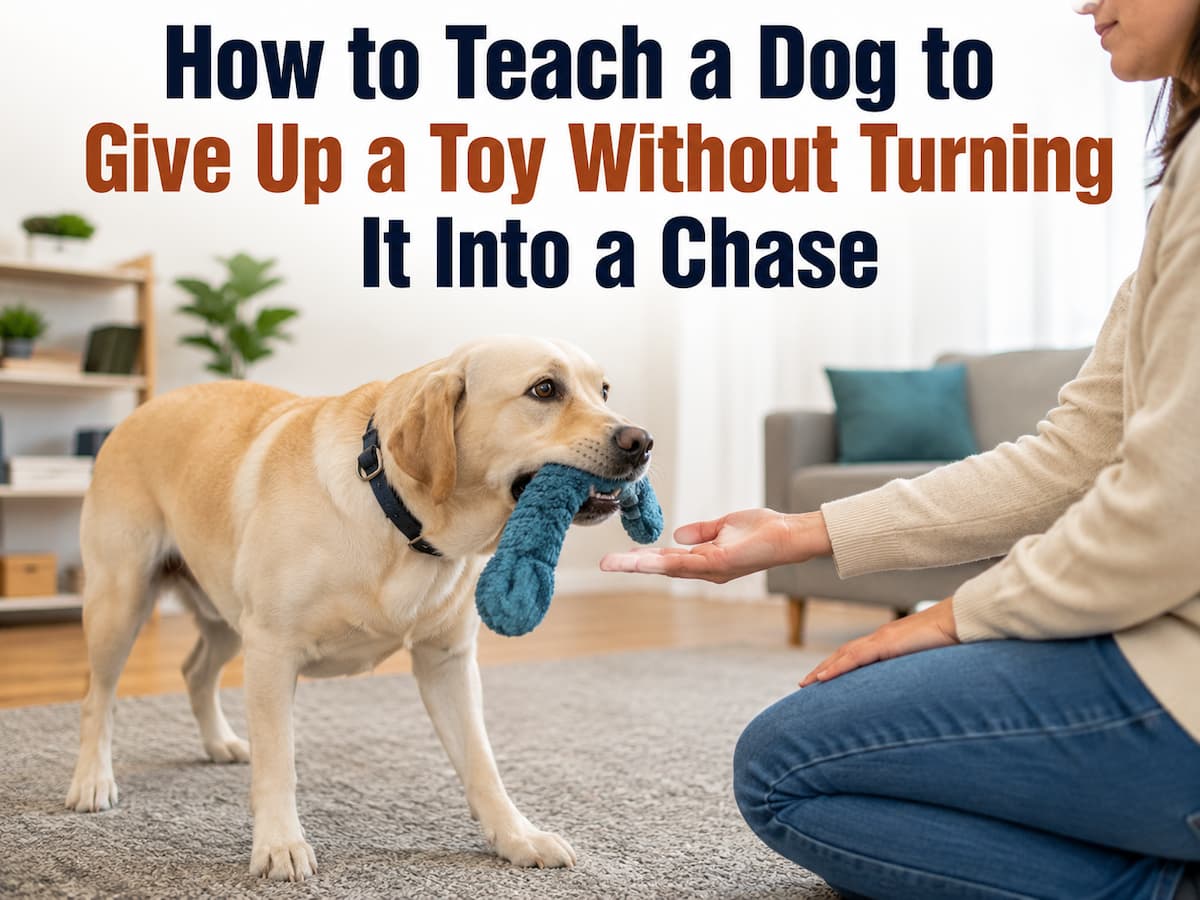
Getting a dog to release a toy sounds like a simple request until the dog grabs the toy, looks at you, and suddenly decides that the living room has become a racetrack. Chasing after a dog can quickly turn a useful training exercise into a game of keep-away. The more the owner follows, reaches, or tries to grab the toy, the more exciting the situation can become. Teaching a dog to give up an object works much better when the dog learns that releasing something does not mean losing everything that is fun.
A reliable release cue is useful in everyday life because dogs naturally pick up objects that are not always appropriate for them. Toys, socks, household items, and things found outdoors can all become interesting. The goal is not to force a dog to surrender every object immediately. Instead, training should build a predictable habit in which the dog hears a cue, releases the item, and discovers that cooperating leads to something worthwhile.
Start With a Toy Your Dog Already Enjoys
Training usually becomes easier when the starting toy is interesting enough to hold the dog’s attention but not so exciting that the dog becomes impossible to engage. A soft tug toy, ball, rope toy, or another familiar item can work well. The first practice sessions should take place in a quiet area where there are few competing distractions. If the dog is already running around, barking, or playing intensely, asking for a controlled release may be unnecessarily difficult.
Let the dog interact with the toy for a short time before introducing the release cue. At this stage, there is no need to repeatedly say “drop it” or “give.” First, the dog needs to understand that the owner is participating in the game rather than trying to end it. Keeping the early sessions relaxed helps prevent the dog from learning that an approaching hand always means the toy is about to disappear.
Teach the Release Without Pulling the Toy Away
One of the easiest mistakes to make is pulling harder when a dog refuses to release a toy. From the dog’s perspective, that resistance can make the object even more interesting. Instead of turning the situation into a contest of strength, introduce an exchange. When the dog has the toy, present a small reward or a second suitable toy and wait for the dog to decide to release the first one.
The moment the dog’s mouth opens and the toy falls, calmly mark the behavior with a word such as “yes” and provide the reward. The important part is timing. The reward should follow the release rather than being given while the dog is still gripping the object. After several repetitions, the dog begins to notice a useful pattern: releasing the toy makes another positive thing happen.
Choose One Release Cue and Keep It Consistent
Dogs learn through repeated associations, so the release cue should remain consistent. You might choose “drop,” “give,” or another short word that everyone in the household can use in the same way. There is no special word that works universally; consistency matters much more than the particular choice.
Say the cue once rather than repeating it several times while waiting for a response. If the dog does not release the toy, avoid turning the cue into background noise by saying it again and again. Instead, make the exchange easier or briefly pause the game before trying again. Repetition should teach the dog that the cue has meaning, not that the owner will eventually keep saying it until something happens.
Make Releasing the Toy Worthwhile
A dog that enjoys its toy has a reason to hold onto it. That is why simply taking the toy away can create a problem. If every successful release ends the fun, the dog may become slower to cooperate over time. A better approach is to show that giving up one toy does not necessarily mean playtime is over.
After the dog releases the toy, offer the reward and then, when appropriate, return the toy. You can also resume a gentle game after the release. This creates an important distinction between releasing the toy and losing it permanently. Once the dog understands this difference, the release cue becomes less threatening, and cooperation becomes easier.
Avoid Turning Training Into a Chase
If your dog grabs the toy and runs away, resist the temptation to follow. Chasing is often highly rewarding on its own, especially for dogs that enjoy movement. Running after the dog can accidentally teach an obvious lesson: stealing the toy makes the owner chase me.
Instead, stop moving and make yourself less exciting. Depending on the dog and the situation, you can move away slightly, offer an exchange, or wait for the dog to return. When the dog comes closer or releases the object, reward the behavior you actually want. This shifts the focus from “catch me if you can” to “coming back and cooperating gets me something good.”
Practice With Short Sessions
A release cue does not need to be practiced for twenty minutes at a time. In fact, short sessions are often easier for both the dog and owner. A few successful repetitions can be enough when you are first introducing the behavior. Once the dog understands the basic idea, you can gradually practice it during normal play.
Short sessions also make it easier to finish while the dog is still engaged. If training continues until the dog becomes bored or frustrated, the final repetitions may be less successful than the earlier ones. Ending after a few good responses gives the dog a clear history of successful practice rather than a long sequence of increasingly difficult attempts.
Gradually Reduce the Reward
Food can be useful when introducing a new behavior, but the long-term goal is not necessarily to give a treat every single time the dog releases a toy. Once the response becomes reliable, you can begin varying the reward. Sometimes the dog might receive praise, sometimes another chance to play, and sometimes a small food reward.
The release itself can eventually become part of a larger game. For example, a dog may release a ball and immediately receive another opportunity to chase it. In that situation, continuing to play becomes a meaningful reward. Varying the rewards also helps prevent the behavior from becoming dependent on one specific type of treat.
Add a Second Toy When Your Dog Understands the Game
Some dogs respond particularly well to an exchange between two toys. This works because the dog does not feel that all the fun disappears when it releases the first toy. Hold one toy while the dog has another, then make the second toy interesting without grabbing the first.
When the dog releases its current toy and turns toward the second one, calmly reward the release by beginning another round of play. Over time, the dog can learn that releasing one object is simply part of the game. This can be especially helpful for dogs that are naturally reluctant to surrender objects they enjoy.
Increase the Difficulty Slowly
A dog that releases a toy perfectly in a quiet room may behave differently in a garden, park, or busy household. That does not necessarily mean the training has failed. It usually means the environment has become more difficult. Distractions, movement, other animals, unfamiliar people, and exciting smells can all compete for the dog’s attention.
Increase difficulty in small steps. Practice first in a calm room, then perhaps in another part of the home, followed by a quiet outdoor area. If the dog suddenly stops responding, make the exercise easier rather than repeatedly giving the cue. Returning to a simpler environment allows the dog to succeed and strengthens the behavior before another challenge is introduced.
Know the Difference Between Play and Resource Guarding
A dog running away with a toy is not automatically displaying resource guarding. Some dogs simply discover that being chased is entertaining. Resource guarding is different because the dog may become tense, stiff, growl, snap, freeze, or otherwise show that it is uncomfortable with someone approaching the item.
If a dog consistently shows defensive behavior around toys or other objects, avoid forcing the item away or deliberately testing the dog’s tolerance. Punishing warning signals can make an already difficult situation more complicated. A qualified veterinary behavior professional or experienced positive-reinforcement trainer can help assess the behavior and develop an appropriate plan.
Use the Skill in Everyday Situations
Once the dog understands the release cue during toy games, the behavior can become useful beyond formal training. You may use it when changing toys, putting playthings away, moving an object out of the dog’s way, or preparing to finish a game. The more naturally the behavior fits into everyday routines, the more practical it becomes.
It is also useful to remember that a release cue should not become a constant command throughout the day. If the dog is repeatedly asked to surrender things without receiving anything meaningful in return, the cue can lose its value. Keep using it thoughtfully and continue to reinforce good responses, especially when the dog gives up something interesting.
What to Do When Your Dog Refuses to Let Go
When a dog refuses to release a toy, the first step is to avoid escalating the situation. Do not grab the dog’s mouth, pull aggressively on the toy, or chase the dog around the house. Instead, pause and consider why the exercise became difficult. The toy may be unusually valuable, the environment may contain too many distractions, or the previous repetitions may have made the dog tired.
Go back to an easier version of the exercise. Use a less exciting toy, move to a quieter location, or offer a better exchange. If the dog succeeds, reward the response and end on that positive repetition. Training improves through successful practice, so making the exercise easier is often more productive than insisting on a difficult response.
Keep the Game Fun Without Letting It Become a Battle
Teaching a dog to release a toy is ultimately about communication. The dog needs to understand what the cue means, while the owner needs to avoid accidentally rewarding the very behavior they are trying to change. Chasing, grabbing, repeatedly shouting commands, and forcibly removing toys can make the interaction confusing or exciting in the wrong way.
A calm exchange creates a much better learning environment. When the dog discovers that releasing a toy can lead to another round of play, praise, or another worthwhile reward, giving up the object becomes less of a loss. With regular practice, the behavior can become an ordinary part of play rather than a struggle between the dog and owner.
Conclusion
A dog does not need to be physically forced to give up every toy. The more useful approach is to teach the dog that releasing an object is a predictable and rewarding behavior. Start with a familiar toy, introduce one clear release cue, reward the moment the dog lets go, and avoid turning refusals into games of chase.
The process becomes easier when owners keep sessions short and gradually introduce distractions. Most importantly, remember that the goal is not simply to make a dog surrender a toy. The goal is to build cooperation so that the dog can release an object without feeling that every release means the end of something enjoyable. With consistent practice, that small skill can become one of the most useful behaviors in everyday life.
FAQs
1. What is the easiest way to teach a dog to drop a toy?
Start by pausing the game and rewarding the moment your dog naturally releases the toy. Once the dog understands that releasing the object produces a reward or another round of play, introduce a cue such as “drop” or “give.”
2. Should I chase my dog when it runs away with a toy?
Usually, no. Chasing can accidentally reinforce this behavior, as many dogs find being chased exciting. Stop pursuing the dog and use a previously trained trade or recall behavior instead.
3. Should I take the toy away after my dog drops it?
Not every time. During training, returning the toy or immediately restarting play can help your dog learn that releasing an object does not always mean losing it permanently.
4. Can treats help teach “drop it”?
Yes. A food reward can be useful for teaching the initial release, particularly when the dog values food more than the toy. Over time, you can vary the rewards so the dog does not depend on receiving food for every successful release.
5. What if my dog refuses to give up its favorite toy?
Instead of repeatedly forcing the issue, consider making the exercise easier. Start with a less valuable toy and build the release behavior before working with highly prized objects.
6. Is taking a toy from a dog’s mouth harmful?
Forcibly taking toys should not be the foundation of release training. Repeated grabbing can create conflict around possessions, particularly in dogs that are already uncomfortable when people approach their resources. Reward-based training provides a safer way to establish the behavior.

Daniel Maxfield is a pet care writer focused on practical guidance for modern pet owners. He covers pet wellness, grooming, behavior, travel routines, and everyday care habits for dogs and cats. Through reader-focused educational content, Daniel shares simple and accessible tips designed to support healthier, safer, and more organized daily life with pets.