
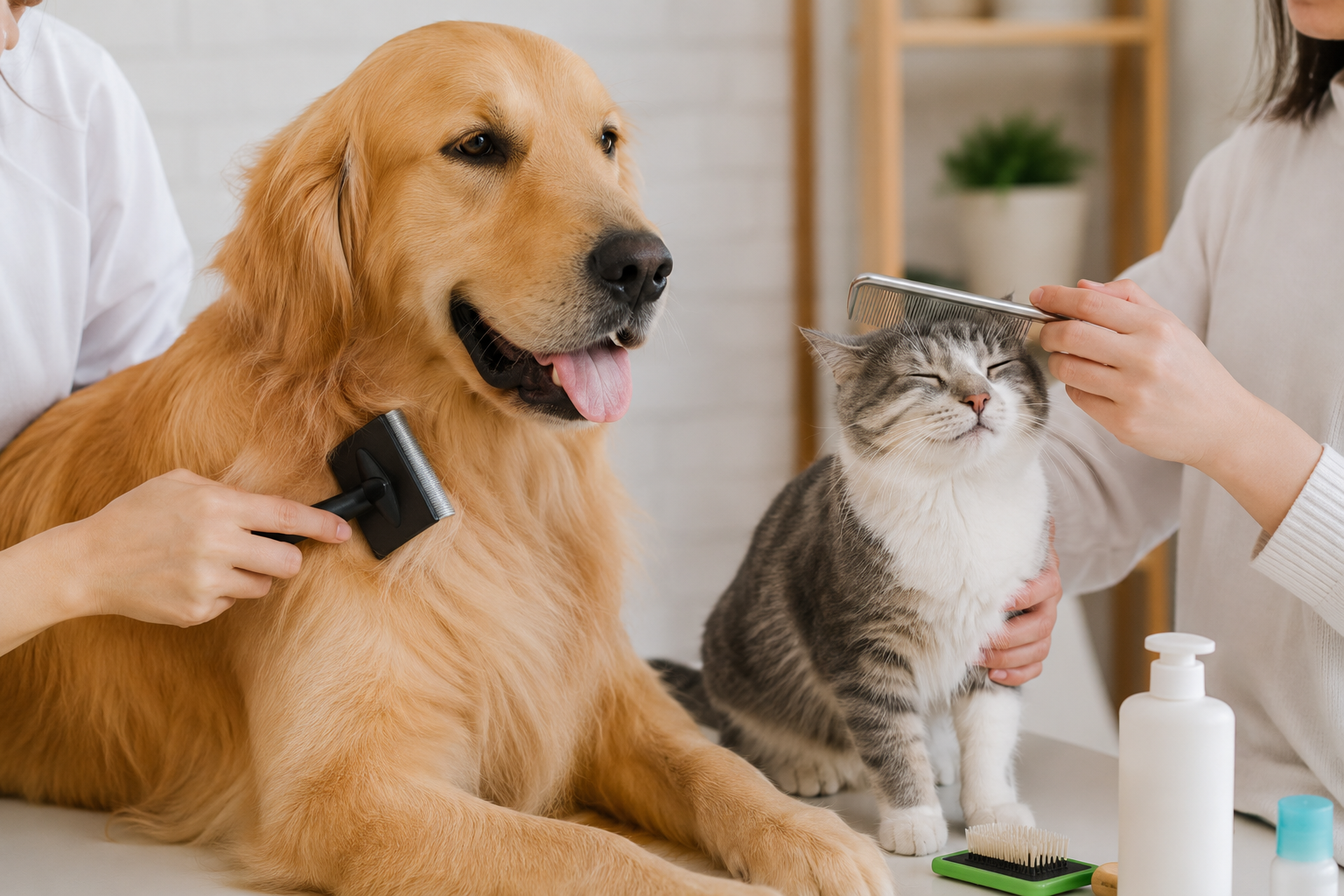
Last spring, I watched my sister wrestle Moochi onto the bathroom counter for what she called “the monthly disaster.” Twenty minutes later, there was cat hair in the sink, a scratch on her wrist, and one very offended feline hiding behind the dryer. Meanwhile, Cooper had just finished his own grooming session in about eight minutes flat, tail wagging the whole time. Same house. Two completely different experiences.
That gap between chaos and calm is exactly why I started paying closer attention to how we groom our pets. Not the show-dog perfection you see on Instagram, but the real-world stuff that keeps Cooper’s coat from matting and Moochi’s claws from turning the couch into shredded wheat. This article pulls from what I’ve learned through trial, error, and a few expensive vet visits that could’ve been avoided with better routine care.
Why Grooming Actually Matters (Beyond Looking Nice)
Cooper’s breeder told me something on day one that stuck: “A clean coat is a healthy coat, but a neglected coat is a medical bill waiting to happen.” She wasn’t being dramatic. When I skipped brushing him for three weeks during a busy work stretch, he developed a hot spot under his ear that cost $180 to treat. One week of consistent brushing would’ve prevented it entirely.
For cats like Moochi, grooming serves a different but equally important function. Cats self-groom constantly, which means they swallow enormous amounts of hair. Without regular brushing to remove loose fur, that hair becomes hairballs, and hairballs become intestinal blockages. My sister learned this the hard way when Moochi needed a $400 procedure to clear a stubborn blockage last fall.
What I Use Weekly (And What Collects Dust in the Drawer)
I’ve bought way too many grooming gadgets over the years. Here’s what actually earns its keep in our house:
| Tool | Best For | Used On |
|---|---|---|
| Slicker brush | Removing loose undercoat, detangling | Cooper (Golden Retriever) |
| Rubber curry brush | Short coats, distributing natural oils | Moochi (short-haired cat) |
| Stainless steel comb | Fine debris, checking for fleas/ticks | Both |
| Nail clippers (scissor style) | Trimming claws safely | Both |
| Pet-safe wipes | Paw cleaning, quick face touch-ups | Both |
The deshedding tool I bought for $35? Used it twice. It pulled Cooper’s coat too aggressively and he started avoiding grooming sessions. The rubber curry brush I picked up for $8 at a pet store? Moochi purrs through entire sessions with it. Sometimes the cheap, simple tool is the right one.
Brushing: The Foundation Everything Else Builds On
Here’s my honest take after three years with Cooper: brushing frequency matters more than brushing perfection. I’d rather do a quick 5-minute session four times a week than one marathon 30-minute session on Sunday. The daily approach prevents mats from forming, distributes skin oils evenly, and gets your pet comfortable with being handled.
For dogs with double coats like Cooper, I follow a simple pattern. I start with the slicker brush, working in the direction of hair growth, paying extra attention to the chest, behind the ears, and the feathering on his legs where tangles love to hide. Then I run the steel comb through to catch anything the brush missed. The whole routine takes under ten minutes.
Moochi’s approach is different. My sister uses the rubber brush during evening TV time, which turns grooming into a relaxed, low-pressure activity. She starts at the head, works back along the spine, and finishes with the sides and belly. The key difference: she stops before Moochi gets annoyed. Five minutes of happy brushing beats fifteen minutes of tolerance every single time.
Bathing: Less Often Than You Think
This surprised me when I first got Cooper. I assumed dogs needed baths weekly, maybe even more often. Reality? Most dogs do fine with a bath every 4-6 weeks, and some breeds with oily coats can go even longer. Over-bathing strips natural oils and leads to dry, itchy skin.
Cooper gets a bath when he starts smelling like a dog (usually around the 5-week mark), after swimming in lakes, or if he’s rolled in something questionable during a hike. I use a gentle, oatmeal-based shampoo, lukewarm water, and I make sure to rinse thoroughly. Leftover shampoo residue is a common cause of post-bath itching.
Cats? Moochi has had exactly two baths in her entire life, both because she got into something sticky. Cats generally don’t need baths unless there’s a specific reason. Their self-grooming is remarkably effective. Forcing a bath on a cat that doesn’t need one creates stress for no benefit.
My Bath-Time Setup
Over time, I’ve refined the process into something efficient:
- Brush thoroughly before the bath to remove loose hair and prevent drain clogs
- Place a rubber mat in the tub so Cooper doesn’t slip and panic
- Use a handheld shower attachment or pitcher for controlled water flow
- Keep treats nearby for positive reinforcement
- Towel dry first, then use a low-heat hair dryer on the coolest setting if needed
- Never leave a wet pet in a cold room, even in summer
The first few baths with Cooper were chaotic. He shook water everywhere, tried to climb out, and looked genuinely betrayed. Now? He tolerates it. He doesn’t love it, but he knows the routine, knows it ends, and knows there’s a treat at the finish line. That’s about as good as it gets with a Golden Retriever who’d rather be muddy.
Nail Trimming: The Task Everyone Dreads
I’ll be straight with you: I used to take Cooper to the vet for nail trims because I was terrified of cutting the quick. Then I realized I was spending $25 per visit for something I could learn to do safely at home. I watched three YouTube videos, bought a good pair of scissor-style clippers, and started slow.
The breakthrough came when I stopped trying to trim all nails in one session. Now I do Cooper’s front paws one evening, the back paws the next. Each session takes two minutes. He barely notices. The key is trimming just the tip, little and often, rather than waiting until nails are long and the quick has grown out with them.
For Moochi, my sister uses a different approach entirely. She trims one or two nails during cuddle sessions, never announcing it as “grooming time.” The cat doesn’t even realize it’s happening. She also keeps styptic powder on hand (though she’s never needed it) because peace of mind matters.
Ear Cleaning, Teeth, and the Details Most People Skip
Cooper’s ears are a breeding ground for problems if I ignore them. Golden Retrievers are prone to ear infections because of their floppy ears and love of water. I check his ears weekly, looking for redness, odor, or excessive wax. When they need cleaning, I use a vet-recommended ear cleaner, apply it to a cotton ball (never a Q-tip), and gently wipe the visible parts of the ear canal.
I won’t pretend I’m perfect with dental care. I aim to brush Cooper’s teeth three times a week with poultry-flavored enzymatic toothpaste. Some weeks I manage it. Some weeks I don’t. But I also give him dental chews regularly, and his vet says his teeth look good for a four-year-old dog. It’s about consistency over perfection.
Moochi’s dental situation is simpler in some ways, trickier in others. My sister brushes her teeth occasionally, but she also feeds dental treats and has the vet check her mouth at every visit. Cats are masters at hiding dental pain, so regular professional checks matter more than home brushing for catching problems early.
One detail I almost skipped: paw pad care. In winter, Cooper’s pads get dry and cracked from salt and cold pavement. I apply a thin layer of paw balm before walks and wipe his feet when we get home. In summer, I check for burns from hot pavement. Moochi’s indoor lifestyle means her paws stay in better shape, but my sister still checks them monthly.
Seasonal Adjustments That Actually Make a Difference
Grooming isn’t a static routine. It changes with the weather, and adjusting accordingly prevents a lot of problems.
| Season | What Changes | Why It Matters |
|---|---|---|
| Spring | Increase brushing to daily for shedding dogs | Cooper blows his entire undercoat; daily brushing prevents mats and reduces hair everywhere |
| Summer | Check for ticks after outdoor time; paw protection from hot pavement | Ticks hide in fur; pavement can reach 135°F and burn pads in seconds |
| Fall | Deep conditioning before winter dryness hits | Prevents dry, flaky skin when indoor heating starts |
| Winter | Paw balm, shorter walks, dry thoroughly after snow | Salt and ice cause cracks; snow buildup between toes is painful |
Last winter, I got lazy about Cooper’s paw care during a particularly cold week. By day four, he was limping. The vet found cracked pads and charged me $90 for treatment that a $12 tub of balm would’ve prevented. Lesson learned. Now the balm lives by the door, not in the drawer.
When to Call a Professional Groomer
I’m a firm believer in doing what you can at home, but I’m equally firm about knowing your limits. I take Cooper to a professional groomer every three months for a full service, including a sanitary trim, nail grinding (which gets them smoother than I can with clippers), and ear plucking if needed.
Professional grooming becomes essential when:
- Your pet’s coat is severely matted (home attempts often make it worse)
- You need a breed-specific cut (like a Poodle or Shih Tzu)
- Your pet is aggressive or extremely anxious about grooming
- You need anal gland expression (most groomers offer this; I let them handle it)
- You simply don’t have the time or physical ability to maintain the coat yourself
There’s no shame in outsourcing. I’d rather pay a groomer $60 every few months than stress Cooper out with a task I’m not equipped to handle well. The groomer we use has been seeing Cooper since he was a puppy, so he knows her and trusts the process. That relationship matters.
Making Grooming a Positive Experience
The biggest mistake I see people make is treating grooming like a chore to rush through. Your pet picks up on that energy. If you’re tense, they’re tense. If you’re frustrated, they’re anxious. I spent months undoing Cooper’s early negative associations with nail trimming because I approached it with impatience.
What works for us now:
- Choose a calm time, not when the doorbell just rang or the kids are running around
- Start with short sessions, even two minutes, and end on a positive note
- Use high-value treats, not just kibble. Cooper gets small pieces of chicken during brushing
- Talk in a calm, steady voice. I literally narrate what I’m doing: “Good boy, just the back legs now”
- Never punish or scold during grooming. If your pet is struggling, stop and try again later
- Build a routine so your pet knows what to expect. Cooper knows brush time follows breakfast
Moochi’s grooming is woven into her daily life so seamlessly that she doesn’t recognize it as a separate activity. My sister brushes her while watching TV, clips nails during lap time, and checks ears while Moochi is sleepy after eating. The cat never feels ambushed.
Quick Answers to Common Grooming Questions
How often should I brush my dog?
Depends on coat type. Short-haired dogs like Beagles might need weekly brushing. Double-coated breeds like Cooper need 3-4 times per week minimum, daily during shedding season. Long-haired breeds often need daily attention to prevent mats.
Can I use human shampoo on my pet?
No. Human skin has a different pH than pet skin. Human shampoo disrupts the natural balance and can cause dryness, irritation, and increased susceptibility to skin infections. Spend the $12 on a proper pet shampoo.
My cat hates being brushed. What should I do?
Start with a very soft brush or even a grooming glove. Let the cat approach it on their own terms. Brush for 30 seconds, reward with a treat, and stop. Gradually increase duration. Some cats prefer being brushed while eating. Experiment with timing and tools until you find what works.
How do I know if my pet’s nails are too long?
If you hear clicking on hard floors, they’re too long. For dogs, nails should not touch the ground when standing. For cats, if the claws catch on fabric or extend significantly beyond the paw pad when relaxed, it’s time for a trim.
Should I shave my dog in summer to keep them cool?
Generally no. A dog’s coat actually provides insulation against heat and protects against sunburn. Shaving can damage the coat and expose skin to UV damage. Regular brushing to remove dead undercoat is a better cooling strategy. Exceptions exist for certain medical conditions, so ask your vet.
What I’ve Stopped Buying (And What Replaced It)
I’ve wasted enough money on grooming products to know what doesn’t work. The expensive “miracle” deshedding tool? Replaced by a $10 slicker brush and consistency. The scented pet wipes that made Cooper sneeze? Replaced by plain, fragrance-free wipes. The “no-rinse” waterless shampoo that left a sticky residue? Replaced by a damp washcloth for spot cleaning.
The best grooming investment I’ve made isn’t a product at all. It’s time. Fifteen minutes a few times per week saves me hours of dealing with matted fur, vacuuming endless hair, and vet visits for preventable skin issues. Cooper’s coat looks better now than it did when I was buying every gadget on the market.
For Moochi, the game-changer was simply moving the brush to the living room. Out of sight, out of mind. Now it’s right there next to the remote, and my sister brushes her almost daily without thinking about it. Sometimes the solution isn’t a better tool; it’s a better system.
Related Articles You Might Find Helpful
If you’re working on building a complete care routine for your pet, these articles from our site cover the areas that connect directly with grooming:
- The Grooming Tools I Actually Use Weekly (and the Ones I Stopped Buying) — A deeper dive into what’s worth your money and what isn’t, with specific product recommendations and honest reviews.
- How to Maintain Dental Health for Pets — Since dental care is part of a complete grooming routine, this covers brushing techniques, dental treats, and when professional cleanings become necessary.
- How to Keep Your Pet Hydrated Daily — Good hydration supports healthy skin and coat, which makes grooming easier and more effective.
- How I Monitor Pet Energy Levels for Early Health Signs — Grooming sessions are one of the best opportunities to notice changes in your pet’s body, behavior, or energy that might signal a health issue.
- Managing Pet Stress During Loud Noises and Busy Days — If your pet gets anxious during grooming, this article offers strategies that can make the experience calmer for both of you.
- Building Positive Behavior in Pets Through Daily Reinforcement — The techniques here apply directly to making grooming a stress-free, positive activity your pet actually tolerates.
- How to Recognize Signs of Pet Stress — Essential reading if your pet shows resistance during grooming; knowing the difference between mild dislike and genuine stress helps you adjust your approach.
- Easy Grooming Tips for Dogs and Cats — Wait, that’s this article. If you’re reading this, you’re already here.
- How I Correct Small Bad Habits in Pets Without Stress — Useful if your pet has developed resistance to grooming and you need to rebuild positive associations gradually.
- Creating a Safe Indoor Environment for Senior Pets at Home — Older pets have different grooming needs, including more frequent checks for lumps, skin changes, and mobility-related hygiene issues.
Sources and References
- American Kennel Club. “Grooming Tips for Dogs.” https://www.akc.org/expert-advice/health/grooming-tips-for-dogs/
- Cornell University College of Veterinary Medicine. “Grooming Your Cat.” https://www.vet.cornell.edu/departments-centers-and-institutes/cornell-feline-health-center/health-information/feline-health-topics/grooming-your-cat
- American Veterinary Medical Association. “Pet Dental Care.” https://www.avma.org/resources/pet-owners/petcare/pet-dental-care
- ASPCA. “Cat Grooming Tips.” https://www.aspca.org/pet-care/cat-care/cat-grooming-tips
- PetMD. “The Importance of Grooming Your Dog.” https://www.petmd.com/dog/grooming/evr_dg_the_importance_of_grooming_your_dog
- VCA Animal Hospitals. “Why Grooming Is Important for Dogs.” https://vcahospitals.com/know-your-pet/why-grooming-is-important-for-dogs
- The Spruce Pets. “How Often Should You Bathe Your Dog?” https://www.thesprucepets.com/how-often-to-bathe-a-dog-4589348
Disclosure: This article contains personal experiences and general pet care information. Always consult your veterinarian for advice specific to your pet’s health, breed, and individual needs. Product mentions are based on personal use and are not sponsored unless explicitly stated.

Daniel Maxfield is a pet care writer focused on practical guidance for modern pet owners. He covers pet wellness, grooming, behavior, travel routines, and everyday care habits for dogs and cats. Through reader-focused educational content, Daniel shares simple and accessible tips designed to support healthier, safer, and more organized daily life with pets.