
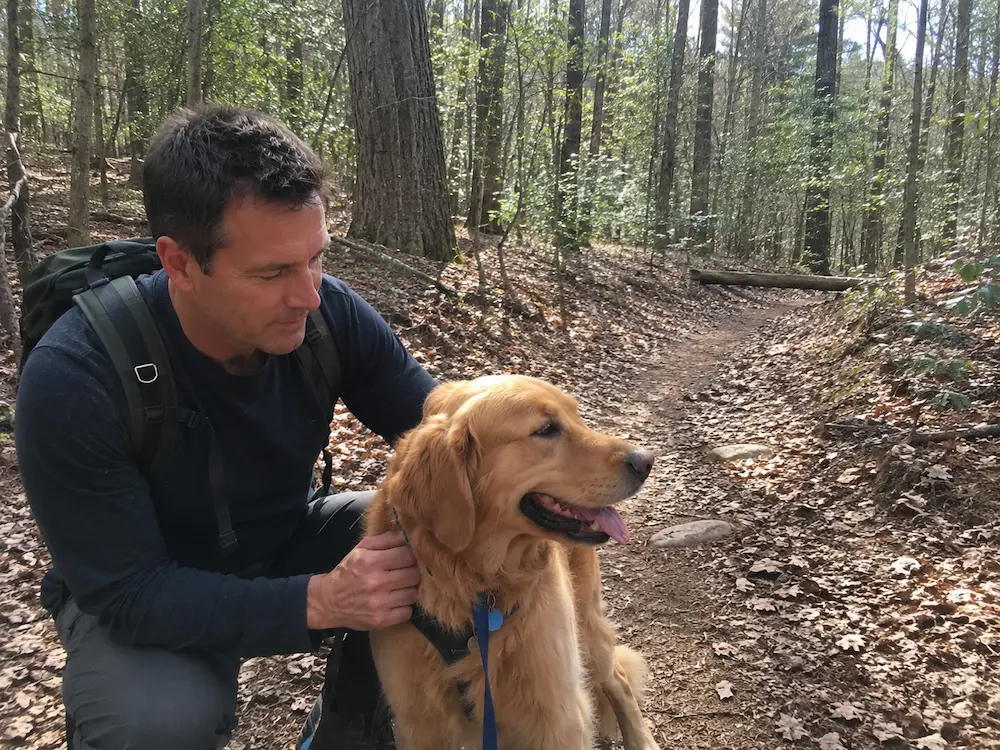
Cooper came to me at eight months old through a rescue that pulled him from an overcrowded shelter in Tennessee. He wasn’t a puppy anymore — past the cute, pliable stage — but not yet an adult with fixed habits. That in-between age meant he had energy to burn, curiosity about everything, and exactly zero experience with the world beyond concrete kennels and chain-link fences. When I took him to a local park for the first time, he hit the grass like he’d discovered a new planet. His nose went to the ground, his tail went up, and he pulled so hard on the leash that I had to plant my feet and brace like I was water skiing. He wasn’t being defiant. He was being a dog who had finally found a world big enough for his senses.
The problem was, he had no idea how to exist in that world safely. He’d chase a squirrel into traffic. He’d drink from a stagnant pond and get sick. He’d approach a stranger’s aggressive off-leash dog because he assumed all dogs were friends. My job wasn’t to contain his enthusiasm. It was to channel it into something sustainable.
That was seven years ago. Cooper has now hiked hundreds of miles across three states. He’s encountered black bears, rattlesnakes, loose cattle, sudden thunderstorms, and trail runners who materialize around bends without warning. He’s learned to stay close, to respond to verbal cues at distance, to navigate water crossings, and to settle quietly at camp while I set up a tent. But none of that happened naturally. It happened through deliberate, patient introduction to each element of trail life, one layer at a time, with setbacks that taught me as much as they taught him.
Before the First Trail: Building the Foundation
You cannot take a dog who doesn’t walk politely on a leash in your neighborhood and expect them to handle a narrow mountain trail with drop-offs, other hikers, and unpredictable wildlife. The foundation has to be solid before the environment gets complex.
I spent Cooper’s first six months working on basic leash manners in low-distraction environments. Not because I wanted perfect heeling — I don’t care if he walks ahead of me, behind me, or at my side, as long as the leash is slack and he responds when I need him to. The cue that mattered most was “with me,” which means “return to my vicinity and check in.” I taught it in the backyard using high-value treats, then practiced on quiet streets, then at busier parks. By the time we hit our first real trail, Cooper understood that “with me” was non-negotiable, even when his nose was telling him to investigate something fascinating.
I also worked on recall in enclosed spaces. Cooper’s recall at the shelter was nonexistent — he’d been punished for coming when called in previous homes, so he’d learned that approaching a human meant bad things. I rebuilt it from scratch in a fenced baseball diamond, using a long line for safety and chicken as currency. The progression was slow: first, coming to me from ten feet away in a quiet space. Then twenty feet with mild distractions. Then fifty feet with other dogs visible in the distance. By month four, he was reliable off-leash in the baseball diamond. That didn’t mean he was ready for off-leash trails. It meant he was ready to start thinking about them.
The final foundation piece was physical conditioning. Cooper had been underexercised in the shelter. His paw pads were soft, his stamina was low, and his joints weren’t used to uneven terrain. I started with thirty-minute walks on pavement, then added hills, then introduced short stretches of grass and dirt. His paws toughened gradually. His muscles adapted. By the time we reached the trail, his body was as ready as his behavior.
The First Real Trail: Choosing Wisely
Not all trails are appropriate for a dog’s first hike. I chose Cooper’s first trail using criteria that had nothing to do with scenery or challenge level:
Distance under three miles: A dog’s first hike should end before they’re exhausted. You want them finishing with energy to spare, associating the trail with positive feelings rather than collapse. Cooper’s first hike was 2.3 miles with minimal elevation gain. He could have done more, but I stopped us while he was still enthusiastic.
Wide, well-maintained path: Narrow trails with drop-offs, rock scrambles, or river crossings are not for beginners. Cooper’s first trail was a converted rail-trail: flat, ten feet wide, packed gravel surface. No technical challenges, no exposure, no places where a misstep would result in injury. We could focus on behavior without managing terrain.
Moderate foot traffic: Completely empty trails are actually harder for socialization than moderately busy ones. Cooper needed to learn that other hikers, bikes, and dogs would pass by without requiring his attention. The rail-trail had enough people to provide that learning opportunity, but not so many that he was overwhelmed.
Proximity to the trailhead: If something goes wrong — injury, exhaustion, behavioral meltdown — you need to be able to get back to the car quickly. I chose a loop that never took us more than half a mile from the parking area. We never needed the escape route, but knowing it existed reduced my anxiety, which reduced Cooper’s.
Water availability: Dogs overheat faster than humans, and they can’t tell you when they’re thirsty. Cooper’s first trail paralleled a shallow creek for most of its length. He could drink, wade, and cool off whenever he needed to. I carried water too, but natural sources reduced the weight in my pack and gave him something to explore.
On-Trail Skills: What Cooper Needed to Learn
Hiking with a dog isn’t just walking with a leash attached. It’s a set of skills that keep both of you safe and make the experience enjoyable rather than stressful.
Trail etiquette for leashed dogs: Cooper’s default position is slightly ahead of me, which is fine on wide trails but problematic on narrow ones where we need to yield to uphill hikers or pass others safely. I taught him “behind,” which means circle behind me and wait. This positions him out of the way while I step aside for others. It took weeks of practice on neighborhood sidewalks before it was reliable on trail, but now it’s automatic.
Wildlife encounters: Cooper’s prey drive is moderate — he’ll chase squirrels in the yard but stops when called. On trail, the stakes are higher. Deer, rabbits, and groundhogs trigger the same instinct, but the chase can take him into dangerous terrain or toward roads. I carry a whistle for emergencies, but the primary tool is prevention: keeping Cooper close in areas with high wildlife activity, using “leave it” before he locks onto movement, and rewarding check-ins frequently so staying near me is more rewarding than chasing. We’ve had close calls — a deer burst from brush ten feet ahead once, and Cooper lunged before I could react. The leash caught him. He yelped, the deer vanished, and Cooper spent the next mile glued to my side, processing. That was a teaching moment for both of us.
Water crossings: Cooper’s first encounter with moving water was a shallow stream crossing on a trail in Virginia. He stopped at the edge, lowered his head to sniff, and refused to step in. I didn’t force him. I waded in myself, splashed gently, and waited. Five minutes later, he followed, one tentative paw at a time. By the third crossing that day, he was walking through confidently. The key was patience and demonstration. Dogs learn by watching. If you act like water is dangerous, they’ll believe it. If you act like it’s normal, they’ll test it.
Rest and recovery cues: On longer hikes, Cooper needs to learn that breaks are part of the rhythm. I taught “settle,” which means lie down and relax until I release you. We practice it at home, at parks, and now on trail at every rest stop. He lies on his pad, drinks water, and watches the world while I eat a snack. This prevents the “always moving” anxiety that exhausts dogs on long days.
| Skill | How I Taught It | Where We Use It on Trail |
|---|---|---|
| “With me” (return to handler) | Backyard first, then long line in open spaces, high-value rewards for compliance | When Cooper ranges too far, when wildlife appears, when trail narrows |
| “Behind” (yield position) | Sidewalk practice with approaching pedestrians, treat reward for correct position | Passing other hikers, yielding to uphill traffic, stepping aside on narrow trails |
| “Leave it” (disengage from stimulus) | Food on ground first, then toys, then real-world distractions like squirrels | Wildlife, dropped food by other hikers, poisonous plants, interesting but unsafe objects |
| “Settle” (lie down and relax) | Extended down-stay at home, gradually increasing duration and distraction level | Rest breaks, lunch stops, camp setup, waiting for other hikers to pass |
| Water confidence | Shallow creeks first, me demonstrating, no pressure, gradual depth increase | Stream crossings, cooling off in lakes, drinking from natural sources |
Off-Leash Progression: The Gradual Release
I didn’t let Cooper off-leash on a trail for his first year of hiking. Not because I didn’t trust him — though I didn’t, fully — but because I didn’t trust the environment. Off-leash hiking requires both a reliable dog and a manageable landscape. You need to control the variables before you remove the leash.
The progression I used:
Phase 1: Long line on wide trails. A 30-foot cotton line gave Cooper freedom to explore while maintaining physical control. I practiced calling him back, rewarding generously, and gradually reducing the line length as his reliability improved. This phase lasted about four months.
Phase 2: Off-leash in enclosed natural spaces. A large fenced meadow near my home became our practice ground. Cooper could run, sniff, and explore within boundaries I controlled. I worked on recall at distance, emergency stops, and returning to me when called despite distractions. This phase lasted another three months.
Phase 3: Off-leash on familiar, low-traffic trails. The same rail-trail where Cooper started, now with enough familiarity that he knew the route and wasn’t overwhelmed by novelty. I kept the leash clipped to my pack, ready to grab if needed. He stayed within 20 feet, checked in regularly, and came when called. This phase lasted two months.
Phase 4: Off-leash on new trails with judgment calls. Now I assess each trail individually. Is it wide enough for safe visibility? Is the terrain forgiving if he bolts? Are there cliffs, roads, or dangerous wildlife? Is traffic heavy enough that a loose dog would create conflict? If the answers are favorable, the leash stays in my pack. If not, he stays leashed without resentment. Cooper doesn’t know he’s missing freedom. He knows he’s on a hike with me, which is the part he cares about.
Safety Gear: What I Carry and Why
My pack for a day hike with Cooper weighs about eight pounds. Here’s what goes in it:
- First aid kit: Gauze, vet wrap, antiseptic wipes, tweezers for ticks and thorns, styptic powder for torn nails, and a small bottle of dog-safe antihistamine for bee stings or allergic reactions. I’ve used the vet wrap twice for torn paw pads and the tweezers dozens of times for ticks.
- Water and collapsible bowl: Even on trails with natural water sources, I carry at least a liter for Cooper. Giardia and leptospirosis are real risks from untreated water, and I’d rather carry weight than deal with a sick dog three days from a vet.
- Leash and harness: A standard six-foot leash and a back-clip harness for comfort on long walks. I also carry a spare leash after losing one to a broken clip on a remote trail.
- Paw protection: Musher’s Secret wax for hot or rough surfaces, and a set of Ruffwear booties for extreme terrain or prolonged snow. Cooper tolerates the wax; he hates the booties. I use them only when necessary.
- Coat or cooling vest: Depending on season. A light fleece for cold mornings, a cooling vest soaked in water for summer heat. Golden Retrievers overheat easily, and the vest extends our safe hiking window by hours.
- LED collar light: For dawn, dusk, or overcast days when visibility is low. It helps me spot Cooper in brush and alerts other hikers to his presence.
- Poop bags: Non-negotiable. Leave no trace applies to dogs too. I pack out every bag, even on remote trails.
- High-value treats: Freeze-dried liver, small pieces of cheese, whatever motivates Cooper in high-distraction environments. I go through more treats on a hike than in a week of training at home.
When Things Go Wrong: Lessons from the Trail
Cooper and I have had three significant incidents in seven years of hiking. Each taught me something I couldn’t have learned from a book.
The porcupine encounter: Year three, a trail in Pennsylvania. Cooper was off-leash, ranging ahead on a wide path. He rounded a bend and I heard the yelp before I saw the porcupine. Six quills in his muzzle, two in his paw. I leashed him, sat on the ground, and pulled quills with pliers from my multitool while he shook and whined. It took twenty minutes. He was fine within an hour, but I was shaken for days. The lesson: porcupines are slow and predictable. If I’d been paying closer attention to the terrain — rocky outcroppings, dense brush — I would have called Cooper back before he got close. Now I keep him closer in high-risk habitat.
The heat exhaustion: Year four, a trail in North Carolina. I misjudged the temperature, started too late in the day, and pushed Cooper harder than I should have. At mile four, he lay down in the shade and refused to move. His gums were pale, his panting was labored, and his eyes had a glassy quality I’d never seen. I soaked my shirt in a creek, draped it over him, and carried him half a mile to the trailhead. He recovered fully, but it was the closest I’ve come to causing him serious harm. The lesson: start early, carry more water than you think you need, and watch for early signs of overheating — lagging behind, excessive panting, seeking shade, lying down uncharacteristically. When a dog stops voluntarily, it’s already serious.
The aggressive off-leash dog: Year five, a trail in Virginia. A German Shepherd appeared from a side trail, no owner in sight, and charged Cooper. I had Cooper on leash; the Shepherd was not. I positioned myself between them, used my hiking poles as a barrier, and yelled “NO” with the deepest voice I could produce. The Shepherd stopped five feet away, hackles raised, growling. Its owner appeared thirty seconds later, apologizing, leash in hand. Cooper was shaking but unhurt. The lesson: carry a deterrent (poles, umbrella, air horn) for loose dogs, and never assume other hikers are following leash laws. Most conflicts are preventable with vigilance and quick reaction.
Related Articles
Hiking with a dog connects to training, safety, travel, and health management. These articles from our site explore the overlapping topics:
- How I Stopped My Dog From Pulling on the Leash in 3 Weeks — The leash manners that made Cooper’s first trail experiences manageable rather than miserable. Without this foundation, hiking would have been impossible.
- How I Taught My Dog to Stay Calm When the Doorbell Rings — The impulse control techniques that transferred to trail distractions, teaching Cooper to disengage from stimuli rather than react to them.
- My Experience With Clicker Training: 30-Day Results — The marker-based training system I used to build Cooper’s recall and trail cues from scratch after adoption.
- What I Learned From a Professional Dog Trainer in 5 Sessions — Professional guidance that shaped my approach to Cooper’s behavioral challenges, including the leash reactivity that nearly derailed our hiking plans.
- How to Keep Your Pet Hydrated Daily — Hydration on trail is critical and different from home routines. This covers the strategies that prevent the heat exhaustion incident I described.
- How I Monitor Pet Energy Levels for Early Health Signs — The energy tracking system that helps me catch early signs of exhaustion, illness, or injury before they become trail emergencies.
- How to Plan a Pet-Friendly Vacation — Many of our hikes happen during travel. This covers how I structure trips around trail access, dog-friendly destinations, and safe accommodation.
- How I Handle Seasonal Allergies in My Dog Every Spring — Spring hiking means pollen exposure. This covers the allergy management that keeps Cooper comfortable on trail during high-pollen months.
- Easy Grooming Tips for Dogs and Cats — Post-hike grooming prevents ticks, burrs, and matting. This covers the routine that keeps Cooper’s coat healthy despite constant outdoor exposure.
- How I Correct Small Bad Habits in Pets Without Stress — Trail-specific behaviors like scavenging, chasing wildlife, or approaching strangers are addressed using the same positive reinforcement framework described here.
Sources and References
- American Kennel Club. “Hiking With Dogs: A Guide to Safely Hitting the Trails.” https://www.akc.org/expert-advice/training/hiking-with-dogs/
- American Hiking Society. “Hiking With Dogs.” https://americanhiking.org/resources/hiking-with-dogs/
- PetMD. “Trail Safety Tips for Hiking With Dogs.” https://www.petmd.com/dog/travel/trail-safety-tips-for-hiking-with-dogs
- VCA Animal Hospitals. “Heatstroke in Dogs.” https://vcahospitals.com/know-your-pet/heatstroke-in-dogs
- The Spruce Pets. “Tips for Hiking With Your Dog.” https://www.thesprucepets.com/tips-for-hiking-with-your-dog-1118617
- American Veterinary Medical Association. “Traveling With Your Pet FAQ.” https://www.avma.org/resources/pet-owners/petcare/traveling-your-pet-faq
- Leave No Trace Center for Outdoor Ethics. “Traveling With Pets.” https://lnt.org/why/7-principles/travel-and-camp-on-durable-surfaces/
The hiking experiences described reflect seven years of trail time with Cooper, a Golden Retriever adopted from rescue at eight months old. Every dog has different physical capabilities, behavioral histories, and risk tolerances. Start conservatively, build skills gradually, and never push a dog beyond their physical or psychological limits. Trail safety is a shared responsibility between handler and dog.

Daniel Maxfield is a pet care writer focused on practical guidance for modern pet owners. He covers pet wellness, grooming, behavior, travel routines, and everyday care habits for dogs and cats. Through reader-focused educational content, Daniel shares simple and accessible tips designed to support healthier, safer, and more organized daily life with pets.