
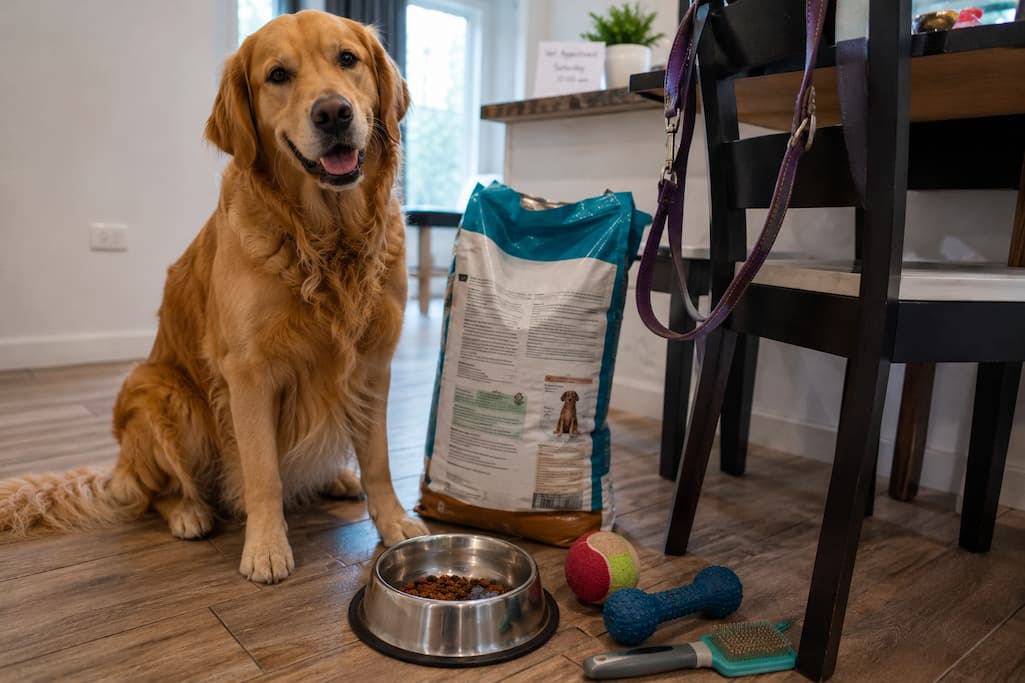
I adopted Cooper on a Saturday in March 2023. Golden Retriever, eight weeks old, paws too big for his body, eyes that made me forget every responsible thought I’d ever had. The breeder wanted $1,200. I paid it without negotiating. That was the last time pet ownership felt simple.
By March 2024, I had spent $4,847. Not estimated. Not projected. Actually spent, tracked in a spreadsheet I started keeping after month three when the credit card statements stopped making sense. This article is that spreadsheet, explained. Every number is real. Some of them still make me wince.
The Adoption: $1,200
Breeder fee. Included first round of vaccines, deworming, and a blanket that smelled like his mother. Worth it? I don’t know. I didn’t shop around. I saw him, I wanted him, I paid. That’s not financial advice. That’s emotion, and emotion is expensive.
What I didn’t pay for: the guilt I felt later about not adopting from a shelter. Battersea Dogs & Cats Home charges £230 for dogs, Dogs Trust around £300 — fees that include microchipping, initial vaccines, and neutering.citeweb_search:11#0 In the US, shelter adoption typically runs $50-$350 depending on age and medical status. Cooper’s breeder was reputable, health-tested parents, the whole checklist. But the cost difference between responsible breeding and shelter adoption is significant, and I want to acknowledge that my choice wasn’t the most economical one.
Veterinary Care: $1,643
This broke down into categories I didn’t anticipate:
- Initial wellness exam and vaccine series: $340. Three visits over sixteen weeks. Distemper, parvovirus, adenovirus, rabies. Each visit had an exam fee ($65), vaccine costs ($25-$45 per shot), and a “new puppy consultation” charge I didn’t understand but paid anyway.
- Unexpected ear infection, month five: $287. Office visit ($85), ear cytology ($45), medication ($67), recheck visit ($90). Cooper shook his head for two days before I noticed the smell. By then, the infection was established enough to need two weeks of drops.
- Neutering, month seven: $425. The low-cost clinic quoted $150. I chose my regular vet because I wanted someone I knew handling anesthesia. Was that rational? Probably not. But I slept better.
- Monthly preventatives: $68/month × 12 = $816. Heartgard Plus, NexGard, both purchased through my vet at markup because I didn’t know Chewy existed yet. First-year me was not a savvy shopper.
- Emergency visit, swallowed sock, month nine: $0. He vomited it up at 2 AM on my bathroom floor. I watched him all night, ready to drive to the emergency clinic. The sock came up whole. The stress cost me sleep. The potential bill, had it lodged, would have been $3,000-$7,000 for foreign body surgery.citeweb_search:11#9 I got lucky. Luck is not a financial plan.
The ASPCA estimates first-year veterinary costs at $1,000-$2,000 for routine care alone.citeweb_search:11#1 I hit the upper end because of the ear infection and because I didn’t know about low-cost vaccine clinics or online pharmacy options. First-year ignorance is expensive.
Food: $1,089
Puppy food for eight months, then transition to adult formula. I started with the breeder-recommended brand — $68 for a 30-pound bag that lasted three weeks. Switched to a mid-tier brand at month four when a vet tech mentioned the first one was “mostly marketing.” New cost: $52 per bag, lasted four weeks. Saved money, Cooper’s coat looked better, I felt foolish for not researching earlier.
Treats added another $180. Training treats, dental chews, the occasional bully stick. I bought premium everything because I thought price correlated with quality. Sometimes it does. Often it doesn’t. I learned to read ingredient lists instead of price tags.
What I didn’t buy: raw diet, fresh food subscriptions, supplements. Those would have added $100-$300 monthly. Rover’s 2025 data puts first-year food costs at $300-$1,500 depending on brand and size.citeweb_search:11#1 Cooper, at 55 pounds by month ten, ate toward the higher end.
Supplies and Equipment: $734
The spending that felt most optional and turned out to be most necessary:
- Crate: $95. Wire, 42-inch, with divider panel for puppy growth. Used daily for eight months, then became his “den” for naps. Still in use.
- Beds: $180 total. First bed, $45, destroyed in three weeks. Second bed, $60, lasted four months. Third bed, $75, orthopedic, still in use. The lesson: cheap beds are expensive.
- Leashes and collars: $85. First leash broke at the clip during a squirrel encounter. Second leash, $35, still functional. Collar with ID tag, $25. Harness for training, $40.
- Toys: $140. KONG Classic ($15), lasted. Rope toys ($8 each), destroyed in days. Plush toys, total waste — Cooper disemboweled them systematically. I stopped buying plush after month four.
- Grooming supplies: $95. Brush, nail clippers, shampoo, ear cleaning solution. I groomed him at home for the first year, which saved professional costs but cost me time and one incident where I cut a nail too short and bled everywhere.
- Miscellaneous: $139. Poop bags, food bowls, water bowls, travel crate, car seat cover, baby gates. The small things that accumulate without notice.
Rover estimates first-year supply costs at $1,150-$4,420 depending on quality choices.citeweb_search:11#1 I stayed low by avoiding smart feeders, automatic toys, and premium everything. But I also replaced things I bought cheaply first. The real cost of supplies is learning what your specific pet actually needs.
Training: $380
Group puppy class: $180 for six sessions. Private session for leash reactivity: $95. Online course for recall training: $45. Books and resources: $60.
The group class was worth every dollar. Socialization during the critical 8-16 week window is non-negotiable for a well-adjusted dog. The private session addressed a specific problem — Cooper lunged at bicycles — and gave me techniques that worked within two weeks. The online course was mediocre. The books sit unread on my shelf.
Training costs vary dramatically. Rover puts annual training at $115-$290 for adult dogs, with higher totals for complex behavioral issues.citeweb_search:11#1 Puppies typically need more upfront investment. I spent less than many because Cooper was generally cooperative and because I had time to practice daily. Time is a cost too, just not one that shows up in spreadsheets.
What I Didn’t Spend (And Why)
Pet insurance: $0. I considered it. Quotes ranged from $35-$75 monthly for accident and illness coverage, with varying deductibles and reimbursement rates.citeweb_search:11#0 I gambled. Cooper stayed healthy enough that I “won” the first year. But the swallowed sock incident could have changed that math instantly. The ASPCA’s March 2026 survey found that 6 in 10 pet owners don’t feel confident they could afford a medical emergency.citeweb_search:11#1 I was one of the 4 in 10 who felt confident — whether that confidence was justified or naive, I still don’t know.
Boarding and daycare: $0. I worked from home. I had family nearby for the one weekend trip I took. Not everyone has this flexibility. Rover estimates boarding at $25-$85 nightly.citeweb_search:11#1 A week-long trip would have added $175-$595 to my first-year total. I avoided travel instead.
Professional grooming: $0. Golden Retrievers need regular brushing, occasional baths, nail trims. I did it all. Professional grooming runs $50-$100 per session, every 6-8 weeks.citeweb_search:11#0 For Cooper’s coat type, that would have been $400-$800 annually. My time investment was roughly three hours weekly. Whether that’s savings or cost-shifting depends on how you value your time.
The Hidden Costs Nobody Lists
These don’t show up in “cost of pet ownership” articles because they’re not direct expenses. But they’re real:
- Security deposit increase: My landlord added $300 to my deposit for having a dog. Non-refundable pet rent in many apartments runs $25-$50 monthly.citeweb_search:11#1 I moved to a pet-friendly building specifically to avoid ongoing rent, but the upfront deposit still stung.
- Furniture damage: $0 for Cooper — he wasn’t a chewer. But my friend’s puppy destroyed a $1,200 sectional in month four. That cost isn’t in any official estimate because it’s variable and unpredictable. Until it happens to you.
- Time: Two hours daily minimum — walks, training, play, grooming, feeding, cleanup. At a conservative $15/hour valuation, that’s $10,950 annually in opportunity cost. I don’t actually calculate this way. But I want to acknowledge that pet ownership costs time in ways that financial breakdowns rarely capture.
- Emotional labor: Worrying about his health, adjusting schedules around his needs, declining social events because he can’t be left alone that long. No price tag. Real impact.
What the Data Says vs. What I Spent
Comparing my experience to published estimates:
ASPCA first-year dog estimate: $1,000-$2,000 for small/medium dogs, $2,000-$3,000 for large breeds. I spent $4,847. The difference: I included everything (including the breeder fee, which some estimates exclude), I had one unexpected vet visit, and I didn’t optimize for cost — I optimized for convenience and peace of mind.
Rover’s 2025 data: first-year costs range from $1,390 to $5,295 depending on size, breed, and choices.citeweb_search:11#1 I landed in the upper middle. Not the most expensive possible, but far from budget.
PetPlace lifetime estimates: small/medium dogs $7,240-$12,700 over their lifetime; large breeds $5,850-$7,950 (shorter lifespans offset higher annual costs).citeweb_search:11#8 At my first-year rate, Cooper’s lifetime cost would exceed $40,000. That number makes me breathe carefully. I don’t think about it often.
What I’d Do Differently
Not much, honestly. The ear infection wasn’t preventable. The sock swallowing was luck of the draw. I could have saved on food by researching earlier, on supplies by buying quality first instead of replacing cheap items, on vet costs by using low-cost clinics for routine vaccines. But the core expenses — the breeder, the neutering, the preventatives, the training — were necessary and reasonably chosen.
The one real regret: not getting pet insurance. Not because Cooper needed it in year one, but because the peace of mind would have been worth the premium. The knowledge that a $5,000 emergency wouldn’t require a credit card decision at 2 AM. I’m considering it for year three, though premiums will be higher now that he’s no longer a puppy.
Related Articles
- How to Maintain Dental Health for Pets — The $269 dental cleaning I didn’t budget for in year one, and why I’m saving for it now
- Easy Grooming Tips for Dogs and Cats — How I learned to groom Cooper at home and what professional grooming would have actually cost me
- How to Keep Your Pet Hydrated Daily — The $85 vet visit for chin acne caused by a $5 plastic bowl, and why I now spend $12 on stainless steel
- How I Handle Feeding Schedules While Traveling With Pets — Why I avoided travel in year one and how I’m planning differently now that I understand the real costs
- How to Plan a Pet-Friendly Vacation — The vacation I didn’t take because I couldn’t afford boarding, and what I’m budgeting for future trips
- How I Monitor Pet Energy Levels for Early Health Signs — How tracking Cooper’s daily patterns helped me catch issues before they became expensive emergencies
Sources and References
- NimbleFins. (2026, March 25). Average Cost to Own a Dog 2026. nimblefins.co.uk
- PetPlace. (2026, March 17). Average Cost of Owning a Dog or Cat in 2026. petplace.com
- Rover.com. (2025, May 8). The Cost of Dog Parenthood in 2026. rover.com
- WebMD Pets. (2026). What to Know About Costs of Emergency Veterinary Care. webmd.com
- MarketWatch. (2026, May 1). How Much Does a Vet Visit Cost? (2026 Pricing). marketwatch.com
- Pawlicy Advisor. (2026, April 23). How Much Does a Vet Visit Cost? (2026 Price List). pawlicy.com
- CareCredit. (2026, May 1). How Much Does an Emergency Vet Visit Cost?. By Dr. Kathy Wiederkehr (Wentworth), V.M.D. carecredit.com
- AKC Pet Insurance. (2022, June 23). The Cost of A Puppy’s First Year. akcpetinsurance.com

Daniel Maxfield is a pet care writer focused on practical guidance for modern pet owners. He covers pet wellness, grooming, behavior, travel routines, and everyday care habits for dogs and cats. Through reader-focused educational content, Daniel shares simple and accessible tips designed to support healthier, safer, and more organized daily life with pets.