
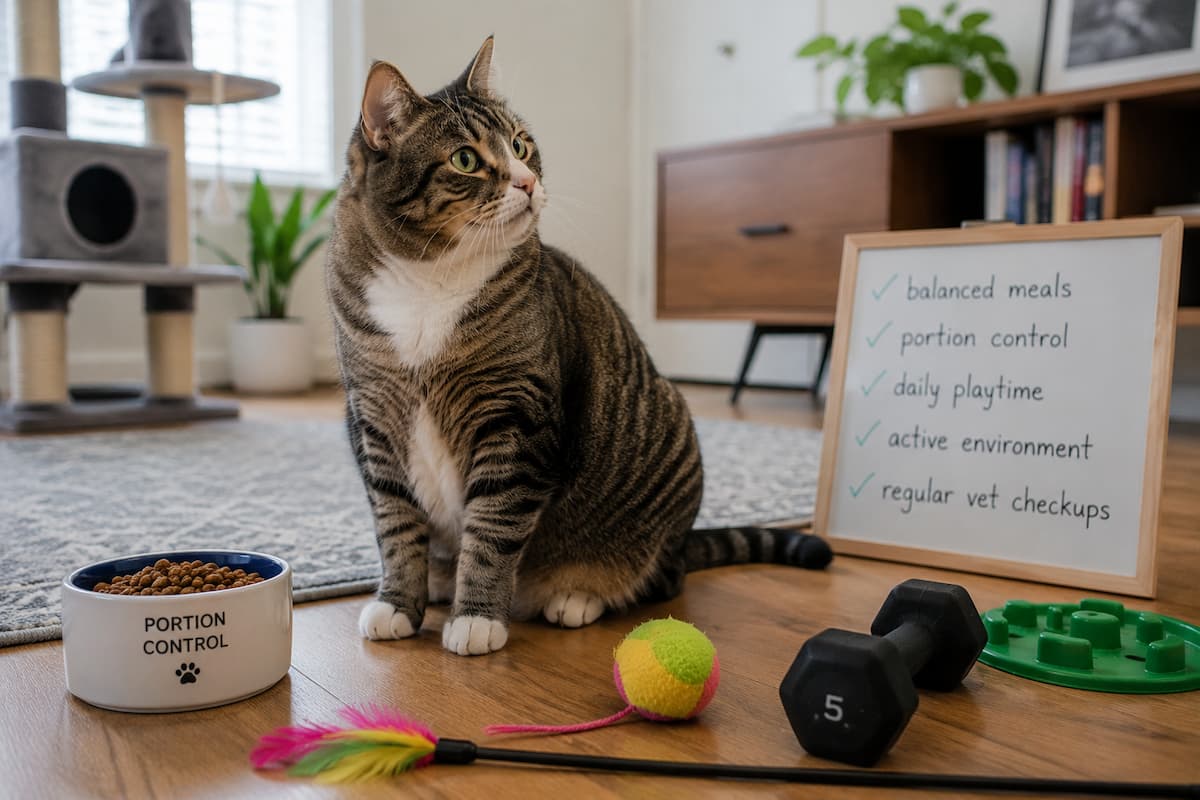
The vet didn’t say “fat.” Vets never do. She said Moochi was “carrying a few extra ounces” and suggested we “keep an eye on her portions.” My sister left the clinic with a pamphlet about feline obesity, a sample bag of prescription weight-loss kibble, and a vague sense of guilt that she’d somehow failed her cat by feeding her the same food she’d always eaten.
Here’s what the vet didn’t explain: restrictive dieting doesn’t work well for cats. Unlike dogs, who can tolerate gradual calorie reduction without major metabolic consequences, cats are obligate carnivores with livers designed for continuous protein processing. Cut their calories too aggressively and you risk hepatic lipidosis, a life-threatening liver condition where fat accumulates faster than the liver can process it. A cat can go from slightly overweight to critically ill in a matter of weeks if you diet them wrong.
So my sister didn’t diet Moochi. Not in the conventional sense. She changed how Moochi ate, when she ate, what she ate, and how she lived. Over eight months, Moochi lost 1.8 pounds — from 13.2 to 11.4 — without ever seeming hungry, without prescription food, and without the stress that makes cats hide, overgroom, or develop behavioral issues. This is how we did it.
The Problem With Most Weight-Loss Advice for Cats
Walk into any pet store and you’ll find shelves of “weight management” cat food. The marketing is seductive: same great taste, fewer calories, your cat won’t even notice. The reality is more complicated. Most commercial weight-loss formulas achieve calorie reduction by increasing fiber and carbohydrate content while decreasing protein and fat. For a species that evolved to eat small prey animals — high protein, moderate fat, minimal carbs — this is backwards.
Cats don’t process carbohydrates efficiently. Their bodies aren’t designed for it. When you feed a cat a high-carb, low-protein diet, several things happen: they feel less satiated because protein triggers satiety hormones more effectively than carbs; their blood sugar spikes and crashes, creating hunger cycles; and their muscle mass declines because they’re not getting enough amino acids to maintain it. The weight they lose isn’t just fat. It’s muscle, organ tissue, and metabolic function.
Moochi’s vet recommended a prescription diet that was 28% protein and 35% carbohydrates. For comparison, a mouse is approximately 55% protein and 3% carbohydrates. The disconnect is staggering. My sister politely declined the prescription and started researching alternatives.
What We Changed: Food Composition
The first and most important change was the food itself. My sister switched Moochi from a mid-tier dry kibble to a high-protein, grain-free wet food with the following approximate composition: 50% protein, 15% fat, 5% carbohydrates, 70% moisture. The moisture content matters enormously — cats have a low thirst drive and often don’t drink enough water to compensate for dry food dehydration. Chronic mild dehydration contributes to kidney stress, urinary issues, and a sluggish metabolism.
The transition took three weeks. She mixed increasing amounts of wet food with decreasing amounts of dry, monitoring Moochi’s stool consistency and appetite. Some cats resist texture changes, so patience was essential. Moochi adapted by day ten, though she initially licked the gravy off and left the chunks. My sister switched to a pate-style food, which Moochi accepted immediately.
Portioning changed too. Instead of one large bowl left out all day, Moochi received measured meals: 2.5 ounces of wet food at 7:00 AM, 2.5 ounces at 6:00 PM, and a small protein-based treat (freeze-dried chicken) at 10:00 PM. The scheduled feeding created structure that Moochi adapted to quickly. Within two weeks, she stopped begging between meals because her body learned when food was coming.
| Metric | Before | After |
|---|---|---|
| Food type | Free-fed dry kibble | Scheduled wet food meals |
| Daily calories | ~280 (unmeasured) | ~220 (measured) |
| Protein content | ~32% dry matter | ~50% dry matter |
| Carbohydrate content | ~35% dry matter | ~5% dry matter |
| Moisture content | ~10% | ~70% |
| Feeding schedule | Ad libitum (free feeding) | Twice daily, measured |
| Weight | 13.2 lbs | 11.4 lbs (over 8 months) |
What We Changed: Activity and Enrichment
Diet alone wasn’t going to work. Moochi had become a sedentary cat, sleeping 18 hours a day and moving only for food, litter box, and brief window-watching sessions. Her muscle mass had declined along with her activity, creating a cycle where less muscle meant lower calorie burn, which meant weight gain even on moderate food intake.
The solution wasn’t a cat treadmill or forced exercise. It was environmental enrichment that encouraged natural movement.
Vertical space activation: My sister rearranged furniture to create a “cat highway” — a continuous path of accessible surfaces at varying heights that Moochi could traverse without jumping dangerously. A sturdy ottoman led to a window perch, which led to a bookshelf, which led to a cat tree. Moochi started using these paths multiple times daily, adding dozens of small movements that accumulated into meaningful activity.
Food puzzles and foraging: Instead of placing Moochi’s food in a bowl, my sister used a puzzle feeder for her evening meal. Moochi had to bat, paw, and manipulate the feeder to release kibble-sized portions of her wet food. This extended mealtime from two minutes to fifteen, added mental stimulation, and created physical activity around eating. The puzzle feeder cost $14. The behavioral and physical benefits were substantial.
Scheduled play sessions: Ten minutes of interactive play twice daily, using a wand toy that mimics prey movement. My sister varied the pattern: ground-level darting, vertical leaps, hiding behind furniture. Moochi’s hunting instincts engaged fully. She’d sprint, pounce, stalk, and eventually flop over in satisfied exhaustion. These sessions burned calories, built muscle, and satisfied behavioral needs that had gone unmet for years.
Outdoor enclosure time: My sister lives in an apartment, but she installed a window catio — a mesh enclosure that attaches to the window frame. Moochi spends 30-60 minutes daily in the catio, watching birds, sniffing air currents, and occasionally doing her “chattering” behavior at squirrels. The mental stimulation reduces stress-eating, and the temperature variation (colder in winter, warmer in summer) slightly increases her metabolic rate as her body regulates.
What We Didn’t Change (And Why)
Some common weight-loss strategies were deliberately avoided:
No calorie-counting apps or obsessive weighing: Moochi was weighed monthly at the vet’s office, not weekly at home. Home scales for cats are notoriously inaccurate, and frequent weighing creates anxiety for both cat and owner. The monthly check provided trend data without micromanagement.
No food restriction between meals: Moochi always had access to fresh water and her scheduled meals arrived on time. The goal was predictable nourishment, not scarcity. Scarcity triggers stress responses in cats, including cortisol release that actually promotes fat storage.
No “diet” treats or low-calorie substitutes: When Moochi got treats, she got real food: small pieces of cooked chicken, freeze-dried liver, or a lick of plain Greek yogurt. The psychological satisfaction of real food outweighs the minimal calorie difference, and it prevents the treat-seeking behavior that makes cats beg for processed snacks.
No multiple-cat feeding complications: This was simpler for my sister because Moochi is an only cat. In multi-cat households, weight management is harder because you can’t easily control who eats what. If you’re in that situation, microchip-activated feeders that open only for the programmed cat are worth the investment. They’re not cheap, but neither is treating obesity-related diabetes.
The Timeline and What Happened
Weight loss in cats should be gradual. The general veterinary recommendation is 1-2% of body weight per week, which for Moochi meant roughly 2-4 ounces weekly. Faster than that risks muscle loss and hepatic lipidosis. Slower than that and the cat (and owner) loses motivation.
Month 1: Transition to wet food complete. Moochi’s weight dropped from 13.2 to 12.9 lbs. The initial drop was mostly water weight as she transitioned from dehydrating dry food to moisture-rich wet food. Energy levels improved noticeably — more playful, more alert, more interested in her surroundings.
Month 2-3: Steady loss of 2-3 ounces per week. Weight reached 12.2 lbs. My sister added the puzzle feeder and play sessions during this period. Moochi’s muscle tone improved — she could jump to her window perch more easily, and her gait looked stronger.
Month 4-5: Plateau at 12.0 lbs for three weeks. This is normal — metabolic adaptation causes temporary stalls. My sister increased play session duration from 10 to 15 minutes and added a third short play session in the afternoon. Weight resumed dropping, reaching 11.8 lbs by end of month 5.
Month 6-8: Gradual decline to 11.4 lbs. The pace slowed to 1-2 ounces per week as Moochi approached her target weight. My sister maintained the routine without further calorie reduction. The vet was satisfied with the rate and composition of the loss.
At her final weigh-in, Moochi’s body condition score improved from 7/9 (overweight) to 5/9 (ideal). Her coat was shinier, her eyes brighter, her movement more fluid. She didn’t know she’d been on a weight-management plan. She just knew she felt better.
Common Mistakes That Sabotage Feline Weight Loss
I’ve watched friends and family struggle with cat weight management, and the same errors recur:
Cutting calories too fast: A friend put her overweight cat on half rations. The cat lost weight for three weeks, then stopped eating entirely and developed hepatic lipidosis. Emergency hospitalization, feeding tube, $3,200 in vet bills. The cat survived but never fully recovered. Gradual reduction isn’t being soft. It’s being safe.
Ignoring the water issue: Dry food diets create chronic mild dehydration that stresses kidneys and reduces metabolic efficiency. Switching to wet food addresses this immediately. If your cat absolutely refuses wet food, add water to dry kibble and let it soften, or invest in a pet water fountain that encourages drinking through movement and freshness.
Measuring food by volume instead of weight: A “cup” of kibble varies enormously depending on how densely it’s packed. My sister uses a kitchen scale and measures Moochi’s food in grams. Precision matters when you’re working with small calorie margins.
Feeding the same food forever: Cats can develop food boredom or sensitivities. My sister rotates between three high-protein wet foods (chicken, turkey, and fish-based) to maintain Moochi’s interest and ensure nutritional variety. The protein and carb ratios stay consistent; only the protein source changes.
Expecting the cat to exercise alone: Cats don’t self-exercise reliably. The wand toy sessions, puzzle feeders, and environmental enrichment were all initiated by my sister. Moochi didn’t spontaneously decide to get fit. She responded to opportunities that were created for her.
Frequently Asked Questions
How fast should my cat lose weight?
Aim for 1-2% of body weight per week. For a 12-pound cat, that’s roughly 2-4 ounces weekly. Faster loss risks hepatic lipidosis and muscle wasting. If your cat loses more than 4 ounces in a week, increase calories slightly and consult your vet.
My cat refuses wet food. What should I do?
Transition gradually over 2-3 weeks. Start by adding a tablespoon of wet food to the dry, mixing thoroughly. Increase the wet ratio slowly. Warm the wet food slightly to enhance aroma. Try different textures — pate, chunks in gravy, flaked. Some cats are texture-specific. If all else fails, add water to dry food and use a high-quality grain-free kibble with the highest protein content you can find, but understand this is a compromise, not an equivalent.
Can I free-feed a high-protein dry food instead?
You can, but it’s less effective. Free feeding removes the structure that helps regulate metabolism, and even high-quality dry food lacks the moisture that supports kidney health and satiety. If you must free-feed, measure the daily portion precisely and don’t refill until the next day. But scheduled meals are strongly preferred for weight management.
How do I know if my cat is actually overweight?
Use the body condition score (BCS) system. At ideal weight, you should feel ribs with slight fat covering (like the back of your hand), see a visible waist behind the ribs when viewed from above, and notice a slight abdominal tuck when viewed from the side. If you can’t feel ribs easily, if the waist is absent, or if there’s a belly pouch that swings when the cat walks, your cat is likely overweight. A vet can confirm with a BCS assessment.
What if my cat begs constantly on a reduced-calorie diet?
First, ensure the food is high enough in protein. Protein deficiency causes persistent hunger in cats. Second, add bulk through water content — wet food is naturally more filling per calorie. Third, increase play and enrichment to redirect attention. Fourth, consider splitting meals into smaller, more frequent portions. If begging persists after these adjustments, consult your vet to rule out medical causes of increased appetite, such as hyperthyroidism or diabetes.
Is it okay to give treats during weight loss?
Yes, but account for them in the daily calorie total. If Moochi gets a 10-calorie treat, her evening meal is reduced by 10 calories. Treats should be real food (cooked meat, freeze-dried protein) rather than processed snacks. The psychological benefit of treats during a weight-loss journey is real — for both cat and owner. Just be honest about the math.
Related Articles
Feline weight management intersects with nutrition, behavior, and overall health. These articles from our site explore the connected topics:
- How to Keep Your Pet Hydrated Daily — Hydration is central to metabolic health and satiety. This covers the strategies that support Moochi’s water intake alongside her wet food diet.
- How to Maintain Dental Health for Pets — Wet food diets can affect dental health differently than dry kibble. This covers the oral care routine that balances Moochi’s nutritional needs with her dental hygiene.
- How I Monitor Pet Energy Levels for Early Health Signs — Energy changes were one of the first positive indicators that Moochi’s body composition was improving. This is the tracking system we used.
- How to Recognize Signs of Pet Stress — Diet changes can stress cats. This article helped my sister distinguish between normal adjustment behaviors and genuine distress during Moochi’s transition.
- Creating a Safe Indoor Environment for Senior Pets at Home — As Moochi ages, her activity needs and physical capabilities change. This covers the environmental modifications that support healthy movement for aging cats.
- How I Switched My Dog to a Raw Diet and What Happened — Cooper’s dietary journey offers a canine perspective on species-appropriate nutrition that parallels Moochi’s feline-focused approach.
- How I Handle Seasonal Allergies in My Dog Every Spring — Allergies can affect appetite and activity levels. This covers how Cooper’s seasonal issues intersect with his overall health and weight management.
- The Real Cost of Pet Ownership: My First Year Breakdown — Quality nutrition and enrichment tools represent real costs. This article puts those investments in the context of overall responsible pet ownership.
- How I Correct Small Bad Habits in Pets Without Stress — Begging and food-related behaviors can develop during dietary transitions. These positive reinforcement techniques helped reshape Moochi’s mealtime habits.
- What My Vet Taught Me About Pet Vaccination Schedules — Regular vet visits, including weight checks, are part of a comprehensive health routine. This covers how to structure your pet’s healthcare calendar.
Sources and References
- Cornell University College of Veterinary Medicine. “Feline Obesity.” https://www.vet.cornell.edu/departments-centers-and-institutes/cornell-feline-health-center/health-information/feline-health-topics/obesity
- American Veterinary Medical Association. “Obesity in Pets.” https://www.avma.org/resources/pet-owners/petcare/obesity-pets
- Journal of Animal Physiology and Animal Nutrition. “The Carnivore Connection to Nutrition in Cats.” https://onlinelibrary.wiley.com/doi/full/10.1111/j.1439-0396.2011.01168.x
- VCA Animal Hospitals. “Hepatic Lipidosis in Cats (Fatty Liver Syndrome).” https://vcahospitals.com/know-your-pet/hepatic-lipidosis-in-cats
- PetMD. “How to Help Your Cat Lose Weight.” https://www.petmd.com/cat/nutrition/how-to-help-your-cat-lose-weight
- International Cat Care. “Obesity in Cats.” https://icatcare.org/advice/obesity-in-cats/
- The Spruce Pets. “How to Put Your Cat on a Diet.” https://www.thesprucepets.com/how-to-put-your-cat-on-a-diet-554102
- American Association of Feline Practitioners. “Feline-Friendly Feeding Programs.” https://catvets.com/guidelines/practice-guidelines/feeding-programs
- Merck Veterinary Manual. “Nutritional Requirements and Related Diseases of Small Animals.” https://www.merckvetmanual.com/nutritional-requirements-and-related-diseases-of-small-animals
- Journal of Veterinary Behavior. “Environmental Enrichment for Indoor Cats.” https://www.sciencedirect.com/journal/journal-of-veterinary-behavior
The weight management approach described here was developed for Moochi, a domestic short-haired cat, under veterinary supervision. Every cat has unique metabolic needs, health conditions, and dietary requirements. Consult your veterinarian before making significant changes to your cat’s diet or exercise routine, and never attempt rapid weight loss in cats due to the risk of hepatic lipidosis.

Daniel Maxfield is a pet care writer focused on practical guidance for modern pet owners. He covers pet wellness, grooming, behavior, travel routines, and everyday care habits for dogs and cats. Through reader-focused educational content, Daniel shares simple and accessible tips designed to support healthier, safer, and more organized daily life with pets.