
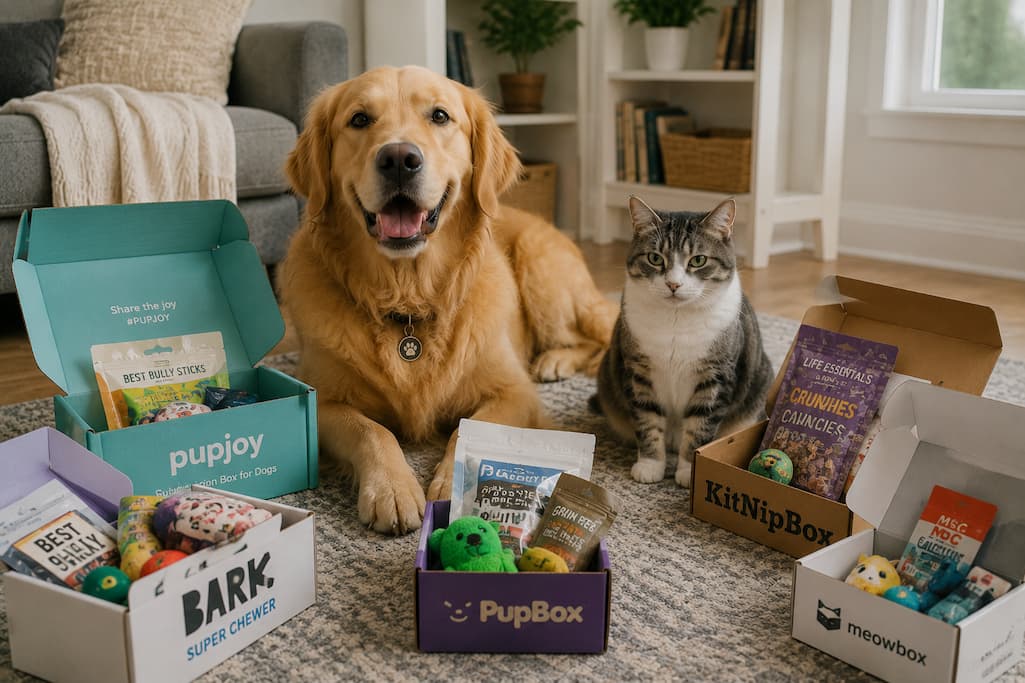
I spent $312 on pet subscription boxes over six months. Some months I felt like a genius. Other months I felt like I had paid someone to ship me garbage in a pretty box. Here is exactly what happened.
It started with an Instagram ad. A golden retriever — not unlike my own Cooper — tearing into a box with a cartoon dog on it, tail going so hard it was a blur. The caption said something about “surprise and delight every month.” I was sitting on my couch at 11 PM, Cooper was asleep on his bed, and I thought, why not? He deserves nice things. Six months later, I have three different subscriptions on rotation, a closet shelf full of rejected treats, and a very strong opinion about which ones are worth your money. This is not a sponsored review. I paid for every box myself. These are my honest thoughts.The Three Boxes I Tested
I picked three of the most talked-about services: BarkBox, PupBox, and Chewy Goody Box. Each one targets a slightly different type of pet owner, and each one taught me something different about what “subscription box” actually means in practice.| Service | Price (Monthly) | What You Get | Best For |
|---|---|---|---|
| BarkBox | $35/month ($22 with annual plan) | 2 toys, 2 treat bags, 1 chew | Dogs who love plush toys and themed surprises |
| PupBox | $39/month ($29 with annual plan) | 5-7 items including training guides, toys, treats, accessories | Puppy owners or dogs needing structured training support |
| Chewy Goody Box | Varies ~$25-40 One-time purchase | 5+ themed items, toys, treats, toppers | Pet parents who want flexibility without commitment |
Month One: The Honeymoon Phase
The first box from any service is always the best. BarkBox sent a “Maws and Paws Farm” theme — two plush farm animals, a bag of oatmeal and cheesy soft-baked biscuits, and a meaty chew. Cooper lost his mind. He carried the plush cow around the house for three days. The treats smelled like actual food, not that chemical peanut butter scent some brands use. PupBox arrived two days later. It had more stuff — a ball chew toy, a cloth mummy for tug-of-war, a skeleton-print bandana, a bag of training treats, and a laminated training card about leash manners. The training insert was genuinely useful. I had been struggling with Cooper pulling toward other dogs on walks, and the step-by-step guide gave me a technique I had not tried before. Chewy’s Goody Box was the most practical. No subscription pressure, just a “Back to School” themed box with a treat-dispensing toy, two bags of limited-ingredient treats, a rope toy, and a food topper. The topper was the standout — I sprinkled it on Cooper’s kibble and he ate with the enthusiasm he usually reserves for table scraps.What I learned the hard way: Do not let your dog “help” open the box unsupervised. Cooper got so excited during the BarkBox unboxing that he swallowed a piece of cardboard insert. It was small, it passed, but I spent an anxious evening watching him. Now I open boxes on the kitchen counter and hand items down one at a time.
Month Two Through Four: The Reality Sets In
By month three, patterns emerged. And not all of them were good. BarkBox started feeling repetitive. The themes were cute — a Star Wars parody box, a summer beach box — but the structure never changed. Two plush toys, two treat bags, one chew. Cooper is a 65-pound golden retriever with a gentle mouth. He does not destroy plush toys. So after four months, I had eight plush toys in a basket and he was ignoring most of them in favor of the one rope toy he has had since he was two. The treats were consistently good quality. Real meat as the first ingredient, no artificial dyes, made in the USA or Canada. But the variety was lacking. Every month it was soft-baked biscuits or jerky-style strips. I wanted to see freeze-dried liver, single-ingredient chews, something different. It never came. PupBox stayed more interesting because the contents evolved. Month two included a teething-focused chew and a potty training guide (not relevant for an 8-year-old dog, but I passed it to a neighbor with a new puppy). Month four had a grooming mitt and a dental chew, which felt age-appropriate. The problem was the treats. The Full Moon Munchers in one box were dry and crumbly. Another bag of training treats had a smell that made me check the expiration date twice. They were fine, just not appetizing. Chewy Goody Box remained the most flexible. I ordered a “Disney” themed box for my niece’s birthday party — she has a beagle — and it was a hit. The no-subscription model meant I could skip months without guilt. But the value was inconsistent. One box had items worth maybe $30 total. Another had a high-quality Kong-style toy and premium treats that would have cost $45 separately.Month Five: The Breaking Point
This is where things got complicated. BarkBox sent a toy that Cooper destroyed in under ten minutes. It was a plush “juice box” with a crinkle interior. He found the seam, pulled the stuffing out, and looked at me like I had betrayed him. I emailed customer service expecting a fight. Instead, they asked for a photo and shipped a replacement within 48 hours. No questions asked. That impressed me. But the replacement was another plush toy. I did not want another plush toy. I wanted them to acknowledge that maybe a 65-pound dog needed something sturdier. I asked about switching to their Super Chewer line. They said I could, but it would reset my annual subscription pricing. I would go from $22 a month back to $35. For a box of tougher toys I was not even sure Cooper would like. PupBox hit a different wall. The training guides stopped being useful around month four. Cooper is not a puppy. He knows how to sit, stay, and walk on a leash. The guides started feeling like filler — generic advice I could find in any dog training book. And the accessories got weird. A bandana every other month. A tiny leash clip light. A collapsible water bowl that leaked the first time I used it. Chewy was the only one that did not disappoint, mostly because I stopped expecting surprises. It is a curated gift box, not a monthly mystery. I ordered one for my sister’s cat, Moochi, and she got a catnip toy, a bag of freeze-dried treats, and a grooming brush. Moochi is 12 years old and mostly sleeps, but she did bat the catnip toy around for a solid five minutes. That is a win in cat terms.The allergy problem nobody talks about: Cooper has seasonal allergies. I mentioned this in every signup questionnaire. BarkBox accommodated by avoiding chicken. PupBox let me specify “no chicken, no pork.” But Chewy’s Goody Box has no customization at all. I had to read every ingredient list before giving Cooper anything from their boxes. If your dog has real dietary restrictions, a one-size-fits-all box is risky.
Month Six: The Math
I sat down with a spreadsheet. I am not proud of this, but it needed to happen. Over six months, I spent:- BarkBox: $132 (annual rate, 6 months)
- PupBox: $174 (monthly rate, I never committed to annual)
- Chewy Goody Boxes: $78 (3 boxes, ordered sporadically)
The Honest Verdict
After six months, I canceled two subscriptions and kept one. Here is where I landed. BarkBox: Canceled. The quality was consistent, the customer service was great, but the format was too rigid for my needs. If you have a dog who loves plush toys and you want a fun monthly surprise, it is a solid choice. For Cooper, it was overkill. I replaced my subscription with occasional purchases from their online store, where I can pick exactly what he wants. PupBox: Canceled. If I had a puppy, I would sign up in a heartbeat. The age-appropriate training guides and developmental toys are genuinely well-designed. For an adult dog, especially a senior like Cooper, it loses relevance fast. The value proposition collapses when the training content no longer applies. Chewy Goody Box: Kept, sort of. I do not have an active subscription because there is no subscription. I order one every couple of months when I see a theme I like or when I need a gift for a fellow pet owner. It is the least exciting option and also the one I have the fewest complaints about.Who should actually get a subscription box? New puppy owners who need structure and guidance. People who love the surprise element and do not mind occasional duds. Gift-givers who want something thoughtful without thinking too hard. Heavy chewers who can use the Super Chewer lines effectively. Everyone else — buy what you need, when you need it. Your dog will not know the difference.
What I Would Do Differently
If I were starting over, I would skip the annual commitment on any service. All three offer monthly options. Yes, the per-box price is higher. But you get to test without the sunk cost fallacy whispering in your ear that you have to keep going because you already paid for the year. I would also be more specific about Cooper’s preferences during signup. I checked “likes plush toys” because he does, occasionally. What I should have said is “prefers rope toys and puzzle feeders, ignores plush after three days.” The algorithms are only as good as the data you feed them. And I would have set a calendar reminder to evaluate at month three instead of waiting until month six. By month four, I was just going through the motions. The boxes sat unopened for days. That is a sign.Frequently Asked Questions
Can you skip a month with subscription boxes?
BarkBox and PupBox both allow skipping, but you typically need to contact customer service. It is not a one-click process. Chewy has no subscription to skip — you just do not order.
Are the treats safe for dogs with allergies?
BarkBox and PupBox accommodate common allergies if you specify them at signup. Chewy Goody Boxes do not offer customization, so read every label carefully.
What happens if my dog destroys a toy immediately?
BarkBox has a replacement guarantee for destroyed toys. PupBox does not advertise one, but their customer service may help on a case-by-case basis. Chewy handles returns through their standard policy.
Is it cheaper than buying items separately?
Sometimes. The retail value of box contents usually exceeds the subscription price. But if your dog ignores half the items, the math stops working in your favor.
Can I get a box for cats?
Chewy offers cat-themed Goody Boxes. BarkBox has a cat version called Meowbox. PupBox is dog-only. My sister’s cat Moochi enjoyed the Chewy cat box, though at 12 years old her enthusiasm has limits.
Related Articles
- ▸ The Best Dog Beds for Large Breeds — I Bought and Tested 4 — Where Cooper actually sleeps when he is not surrounded by rejected plush toys
- ▸ I Tested 5 Automatic Pet Feeders for 30 Days — Here’s the Winner — Another experiment in pet tech that actually saved me time
- ▸ Are Smart Pet Collars Worth It? I Tried Whistle, Fi, and Tractive — Wearable tech that proved more useful than any subscription box
- ▸ I Replaced My Plastic Bowls With Stainless Steel — What Changed — A simple switch that had more impact than six months of subscription boxes
- ▸ The Real Cost of Pet Ownership — My First Year Breakdown — Where subscription boxes fit into the bigger financial picture
- ▸ How I Switched My Dog to a Raw Diet and What Happened — The dietary change that mattered more than any treat box
Sources and References
- Forbes Personal Shopper. (2026, January 7). The Best Dog Subscription Boxes, According To Pet Experts. forbes.com
- Business Insider. (2025, October 16). The 6 best dog subscription boxes for toys and treats, tested and reviewed. businessinsider.com
- My Subscription Addiction. (2023, June 16). Barkbox vs. Pupbox — Which is Better for Your Pup? mysubscriptionaddiction.com
- The Dapple. (2021, September 27). We Bought 9 Popular Dog Subscription Boxes—These Two Were the Best. thedapple.com
- Delivery Rank. (2023, July 19). 6 Best Dog Subscription Boxes 2026: Expert Ranked. deliveryrank.com

Daniel Maxfield is a pet care writer focused on practical guidance for modern pet owners. He covers pet wellness, grooming, behavior, travel routines, and everyday care habits for dogs and cats. Through reader-focused educational content, Daniel shares simple and accessible tips designed to support healthier, safer, and more organized daily life with pets.