
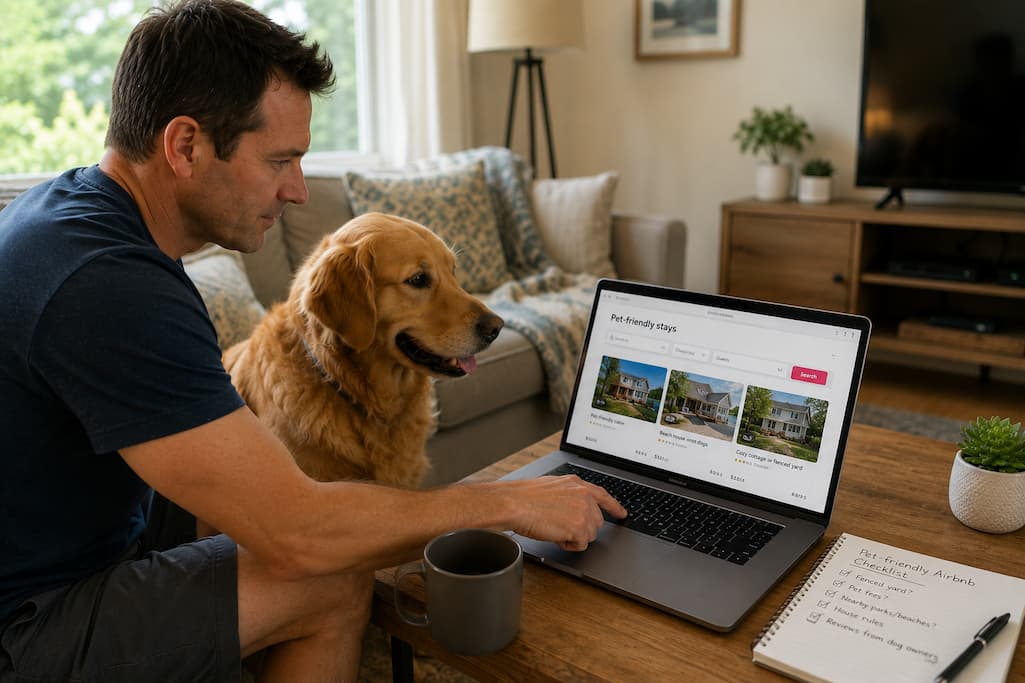
The listing said “pet-friendly” in bold letters, accompanied by a photo of a golden retriever lounging on a porch swing. I booked it for a long weekend with Cooper, paid the premium rate, and drove four hours to a coastal town in Maine. The key was under the mat, exactly as promised. I opened the door to hardwood floors, white furniture, and a framed sign on the console table that read: “No pets on furniture. No shedding breeds. Clean fee is $250 if hair is found.”
Cooper is a Golden Retriever. He sheds. It’s not optional. The sign might as well have said “You are not welcome here.” I stayed because I’d already paid, but I spent the weekend policing Cooper’s every movement, vacuuming twice daily, and sleeping on top of the bedspread rather than under it because I was terrified of leaving hair on the sheets. The porch swing dog in the photo was a prop. The host’s idea of “pet-friendly” was “pets are tolerated at significant financial penalty.”
That experience taught me that “pet-friendly” on Airbnb is meaningless without context. It’s a checkbox, a filter, a marketing term that ranges from “genuinely enthusiastic about animals” to “will accept your money and resent your presence.” Over the past three years, I’ve stayed in 14 Airbnb properties with Cooper. Four were genuinely welcoming. Six were neutral — functional but uninspired. Four were hostile disguised as accommodating. This article is about how to find the four and avoid the rest.
Why the Pet Fee Tells You Everything
Airbnb hosts set their own pet fees, and the amount reveals their attitude more clearly than any description. Here’s what I’ve learned to read:
No pet fee: Rare and usually suspicious. Either the host genuinely loves dogs and doesn’t care about extra cleaning, or they haven’t thought through the implications of allowing pets and will be unpleasantly surprised when your dog actually behaves like a dog. I’ve had one no-fee stay that was magical — the host had three dogs of her own and treated Cooper like a guest. I’ve had another where the host panicked at check-in, demanded a cash deposit, and texted me daily about “potential damage.”
$25-$50 per stay: The sweet spot. This range suggests the host has experience with pets, understands that extra vacuuming is necessary, and has priced the inconvenience fairly. Most of my good stays fell in this bracket. The hosts were prepared: they had dog bowls, a towel for muddy paws, and recommendations for nearby dog parks.
$75-$150 per stay: Proceed with caution. At this level, the host is either covering genuine costs (professional cleaning, potential damage) or they’re signaling that pets are a burden they endure for money. The difference matters. I paid $100 at a lake house where the host explained the fee covered steam-cleaning the rugs between guests — fair, transparent, and the place was immaculate. I paid $125 at a downtown apartment where the host’s tone made it clear I was paying for the privilege of being judged.
$200+ per stay: Unless you’re staying for two weeks or the property is genuinely high-end, this is a red flag. The host sees pets as a revenue stream, not a welcome addition. One host charged $250 and then provided a three-page contract requiring me to document Cooper’s vaccination records, sign a liability waiver, and agree to a post-stay inspection. I felt like I was renting a courtroom, not a cabin.
Reading Between the Lines of Listing Photos
Photos tell stories that descriptions don’t. I’ve developed a visual literacy for spotting genuinely pet-welcoming spaces versus performative pet tolerance.
Signs of genuine welcome: Dog beds visible in corner shots. Water bowls in kitchen photos. Fenced yards photographed from multiple angles. Durable furniture — leather, canvas, outdoor-grade fabrics. Rugs that look washable rather than heirloom. A host who includes their own dog in a photo or two. These details say “we live with animals and our space reflects it.”
Signs of tolerance: White furniture everywhere. Delicate antiques. Light-colored wall-to-wall carpet. Fragile decor at dog-nose height. A single staged photo of a dog on a pristine sofa that looks like it was borrowed for the shot. These spaces aren’t designed for pets. They’re designed for humans who happen to allow pets.
Signs of hostility: No photos of the floor (hiding damage from previous pets). Extreme minimalism that suggests the host values aesthetics over function. Outdoor spaces photographed from inside, suggesting the yard isn’t actually usable. Reviews that mention pets only in the context of fees or rules.
I now scroll through every photo twice before messaging a host. The first pass is for appeal — do I want to stay here? The second pass is for pet evidence — does this space actually accommodate dogs, or does it merely tolerate them? Cooper doesn’t care about mid-century modern furniture. He cares about whether he can stretch out on the floor without me hovering over him with a lint roller.
The Review Section: Where Truth Lives
Airbnb reviews are filtered through politeness. Guests rarely write negative reviews because hosts review guests too, and retaliation is real. But pet-specific reviews contain coded language that experienced travelers learn to decode.
| Review Phrase | What It Actually Means | My Interpretation |
|---|---|---|
| “Host was accommodating about our dog” | The host didn’t cause problems but didn’t go out of their way either | Neutral stay, probably fine for low-maintenance travelers |
| “Our dog loved the yard / the host’s dog / the nearby trails” | The space is genuinely designed with pets in mind | Strong positive signal, likely a good stay |
| “Pet fee seemed high but understandable” | The fee was a significant burden and the guest is rationalizing it | Warning sign about host attitude or hidden costs |
| “Make sure to follow all the pet rules” | The host is strict, possibly punitive, and the guest felt policed | Red flag; avoid unless you enjoy being micromanaged |
| No mention of pets in any review | Either no guests have brought pets, or pet guests had unremarkable stays | Ambiguous; requires direct host communication to clarify |
| “Host provided treats / toys / a welcome basket for our pup” | The host actively welcomes and enjoys pet guests | Excellent signal; these hosts are the gold standard |
I read reviews chronologically, not just the highlighted ones. Recent reviews matter more than old ones — hosts change, policies shift, properties deteriorate or improve. I also check the host’s response to negative reviews. A host who argues with guests about pet-related issues in public responses is unlikely to be reasonable in private.
Location Features That Matter More Than the Listing Itself
The property is only half the equation. The surrounding environment determines whether your dog actually enjoys the trip or just tolerates confinement in a new place.
Proximity to green space: I filter for listings within a 10-minute walk of a park, trail, or beach. Cooper needs to run. A rental with a perfect interior but no nearby outdoor access means he’s pent-up and I’m stressed. The map view on Airbnb is essential for this — I drop the pin and check what’s around it before I even read the description.
Fenced yard vs. unfenced: A fenced yard isn’t mandatory, but it changes the trip dynamic completely. With a fence, Cooper can explore independently while I make coffee. Without one, every bathroom break requires my presence and attention. I’ve paid $30 more per night specifically for fenced yards, and it’s worth every dollar in reduced stress.
Quiet streets vs. busy roads: Cooper is leash-trained but not traffic-proof. A rental on a quiet residential street means relaxed walks. One on a main road means constant vigilance. I use Google Street View to check the neighborhood before booking. It’s not paranoia. It’s knowing that a relaxing vacation requires a relaxing environment for everyone, including the dog.
Local pet infrastructure: Is there a vet within 15 minutes? A 24-hour emergency clinic? A pet store in case you forget food or run out of poop bags? A dog-friendly cafe where you can grab breakfast without leaving Cooper in the car? These amenities aren’t listed on Airbnb, but they define the quality of a pet-friendly trip. I research them separately using Google Maps and local Facebook groups.
What I Pack to Be a Good Pet Guest
The best way to ensure you’re welcome back is to leave the property better than you found it. I travel with a specific kit that makes this possible:
- A portable vacuum (a small handheld unit that costs $30 and fits in my luggage) for daily hair removal
- Cooper’s own bed, which keeps him off furniture and contains his shedding to one washable surface
- A towel specifically for muddy paws, kept by the door and used after every outdoor excursion
- Stain remover spray for accidents — I’ve never needed it, but having it ready prevents panic if I do
- Extra poop bags, because running out in an unfamiliar place is stressful and irresponsible
- A sheet to cover the rental’s sofa if Cooper is allowed on it — protects the furniture, signals respect
- Cooper’s vaccination records and local vet contact, because emergencies don’t care about your vacation schedule
The portable vacuum is the game-changer. Ten minutes of vacuuming daily eliminates the hair accumulation that triggers punitive cleaning fees. I’ve had hosts specifically mention in reviews that they appreciated my cleanliness. One host in Vermont gave me a $50 refund on the cleaning fee because she said the place was cleaner than when I arrived. That vacuum paid for itself twice over.
The Red Flags I Never Ignore Anymore
Experience has taught me that certain signals predict a bad stay with near-certainty. I don’t book if I see these, regardless of how appealing the property otherwise is:
Vague or contradictory pet policies: “Pets allowed with approval” but no fee listed, no size restrictions mentioned, and no details about what’s expected. This means the host hasn’t thought it through and will make up rules as they go, usually to your disadvantage.
Excessive rules in the description: “No pets on furniture, no pets in bedrooms, no barking after 9 PM, no shedding breeds, no dogs over 30 pounds, must be crated when unattended, must provide references from previous hosts.” Each rule is individually reasonable. The accumulation says “I don’t want pets here but I’ll tolerate them for money.” I don’t pay to be tolerated.
No outdoor photos or only heavily filtered ones: If I can’t see the yard clearly, I assume there’s something wrong with it. Overgrown, unfenced, shared with aggressive neighboring dogs, or nonexistent. The yard is where Cooper spends most of his time. I need to see it.
Hosts who ask about breed before anything else: “What breed is your dog?” as the first question is often code for breed discrimination. I’ve been rejected after answering “Golden Retriever” by hosts who presumably wanted something smaller or less active. Breed-focused screening suggests the host cares about appearances, not behavior. A well-trained large dog is less problematic than an untrained small one. Hosts who understand this ask about training and temperament, not breed.
Properties with “no pets” in the house rules but “pet-friendly” in the amenities: This contradiction usually means the host is new, confused, or testing the market. Either way, it signals poor communication and potential conflict.
Building Relationships With Hosts Who Actually Care
The best stays aren’t transactions. They’re relationships. I’ve found three hosts through Airbnb who I now book directly with, bypassing the platform entirely. They know Cooper. They remember his preferences. They text me when they’re traveling to my area and suggest we meet up. These relationships started with a single Airbnb booking and grew because I was a respectful guest and they were genuinely welcoming hosts.
How to build these relationships:
Be transparent before booking. Don’t hide your dog’s size, breed, or behavior. If Cooper sheds, say so. If he’s vocal when excited, mention it. Surprises create conflict. Honesty creates trust.
Communicate during the stay. A quick text — “Cooper loved the trail you recommended, thanks!” — takes 30 seconds and humanizes the interaction. Hosts who feel connected to their guests are more flexible, more responsive, and more likely to accommodate special requests.
Leave a detailed, honest review. Mention specifics: the dog bed, the trail map, the flexibility about check-in time. Reviews are currency in the Airbnb ecosystem, and thoughtful ones build goodwill that translates to better treatment on return visits.
Return. The second stay is always better than the first. The host remembers you. The dog remembers the space. The anxiety of the unknown is replaced by the comfort of familiarity. One of my regular hosts in the Adirondacks now leaves a bag of Cooper’s favorite treats on the counter before we arrive. That’s not policy. That’s relationship.
When Airbnb Isn’t the Right Choice
Sometimes the best pet-friendly rental isn’t on Airbnb at all. I’ve had excellent stays through:
VRBO: Tends to have more whole-house rentals with yards, which suits Cooper better than apartments. The pet policies are often more straightforward because the platform attracts families rather than urban travelers.
BringFido: A pet-specific platform that filters exclusively for genuinely pet-welcoming properties. The selection is smaller, but the accuracy is higher. Every listing is vetted for pet policy clarity.
Direct booking with pet-focused properties: Some cabins, farm stays, and rural rentals maintain their own websites and specifically market to dog owners. These are often the most welcoming because pets are their target demographic, not an afterthought.
I still use Airbnb for about 60% of my travel because the selection is unmatched. But I’ve learned to supplement it with other platforms when the Airbnb options feel hostile or overpriced. The goal is a good trip, not loyalty to a platform.
Related Articles
Finding the right accommodation is just one piece of traveling with pets. These articles from our site cover the connected logistics:
- How to Plan a Pet-Friendly Vacation — The broader framework for trip planning, from destination selection to daily itinerary design that keeps your dog engaged and happy.
- My Experience Flying With a Pet: What Airlines Don’t Tell You — Sometimes driving isn’t practical. This covers the air travel realities that determine whether flying with Cooper is worth the cost and stress.
- How I Pack a Lightweight Travel Kit for Pet Comfort — The specific items I bring on every trip, including the portable vacuum and paw-cleaning setup that make me a welcome return guest.
- My Honest Review of 3 Pet-Friendly Hotel Chains After 10 Stays — Hotels are an alternative to Airbnb when you need flexibility. This covers which chains deliver on their pet promises and which fall short.
- How I Handle Feeding Schedules While Traveling With Pets — Changing environments disrupt routines. This is how I maintain Cooper’s nutrition and schedule consistency across different accommodations.
- How I Prepare My Pet for Holiday Boarding and When I Skip It — Not every trip allows pets. This covers the boarding alternative and how I decide whether Cooper comes along or stays behind.
- A Day in the Life: My Dog’s Routine at a Pet-Friendly Beach Town — What a genuinely good pet-friendly trip looks like once you’ve found the right place. This is the payoff for all the searching.
- How I Explore Cities Safely With My Pet Step by Step — Urban Airbnb stays require different navigation than rural ones. This covers leash laws, safe spaces, and city-specific hazards.
- Managing Pet Stress During Loud Noises and Busy Days — New environments are inherently stressful. These techniques help Cooper settle into unfamiliar spaces faster and more comfortably.
- How to Recognize Signs of Pet Stress — A rental that looks perfect to you might overwhelm your pet. This helps you read Cooper’s signals and adjust accordingly.
Sources and References
- Airbnb. “Airbnb Animal Welfare Policy.” https://www.airbnb.com/help/article/1869
- American Kennel Club. “Tips for Traveling With Your Dog.” https://www.akc.org/expert-advice/travel/tips-for-traveling-with-your-dog/
- BringFido. “Pet Travel Guide and Accommodations.” https://www.bringfido.com/
- The Spruce Pets. “How to Travel With Your Dog.” https://www.thesprucepets.com/traveling-with-your-dog-1118614
- PetMD. “Tips for Taking Your Dog on Vacation.” https://www.petmd.com/dog/travel/tips-taking-your-dog-vacation
- American Society for the Prevention of Cruelty to Animals. “Traveling With Your Pet.” https://www.aspca.org/pet-care/general-pet-care/traveling-your-pet
The experiences and strategies described reflect personal travel with Cooper, a Golden Retriever, across multiple Airbnb stays over three years. Host attitudes, policies, and platform features change over time. Always verify current pet policies directly with hosts before booking, and communicate openly about your pet’s specific needs and behaviors.

Daniel Maxfield is a pet care writer focused on practical guidance for modern pet owners. He covers pet wellness, grooming, behavior, travel routines, and everyday care habits for dogs and cats. Through reader-focused educational content, Daniel shares simple and accessible tips designed to support healthier, safer, and more organized daily life with pets.